Responsible Tourism Company | Best Uganda Safari Tour Operator & Travel Agent | Bunjazi Central Forest Reserve, Ssese Islands | Uganda
  • Home
  • Uganda Tour Packages
    • Adventure
    • Culture & Life
    • Travel with Purpose
    • Hiking & Trekking
    • Safaris and Gorillas
    • Mountain and Volcano Climbing
    • Custom Itineraries
  • Destinations
        • Uganda
          • Day Trips
          • Uganda Tours
          • Attractions
        • Rwanda
          • Day Trips
          • Rwanda Tours
          • Attractions
        • Kenya
          • Day Trips
          • Kenya Tours
          • Attractions
  • About us
    • Background
    • Why Us?
    • Our Team
    • Responsible Travel
    • Tours and Activities
    • Transportation Services
    • AMAIDI
  • Hotels & Accommodation
    • Hotels
    • Beach Resorts
    • Safari Lodges and Camps
    • Guest Houses
    • Homestays
  • Travel Blog
    • Travel USA
    • Travel UK
  • Request For Quote
  • Home
  • Cruises
  • Bunjazi Central Forest Reserve, Ssese Islands | Uganda
x Thank you for submitting an inquiry. We will get back to you as soon as we can.
x

Use the form below to contact us directly.

Please complete all required fields.

Cancel

Booking details

Cruise name:

Cabin type:

Date:

People:

Adults:

Children:

Cabins:

Total:

Submit booking

Submit booking Go Back
x

Confirmation

Thank you! We will get back you with regards your booking within 24 hours.

Booking info

Cruise name:

Cabin type:

Cruise date:

People:

Adults:

Children:

Cabins:

First name:

Last name:

Company:

Email:

Phone:

Address:

Address 2:

City:

Zip:

State:

Country:

Special requirements:

Total price:

We wish you a pleasant trip
your Responsible Tourism Company team

Back to website
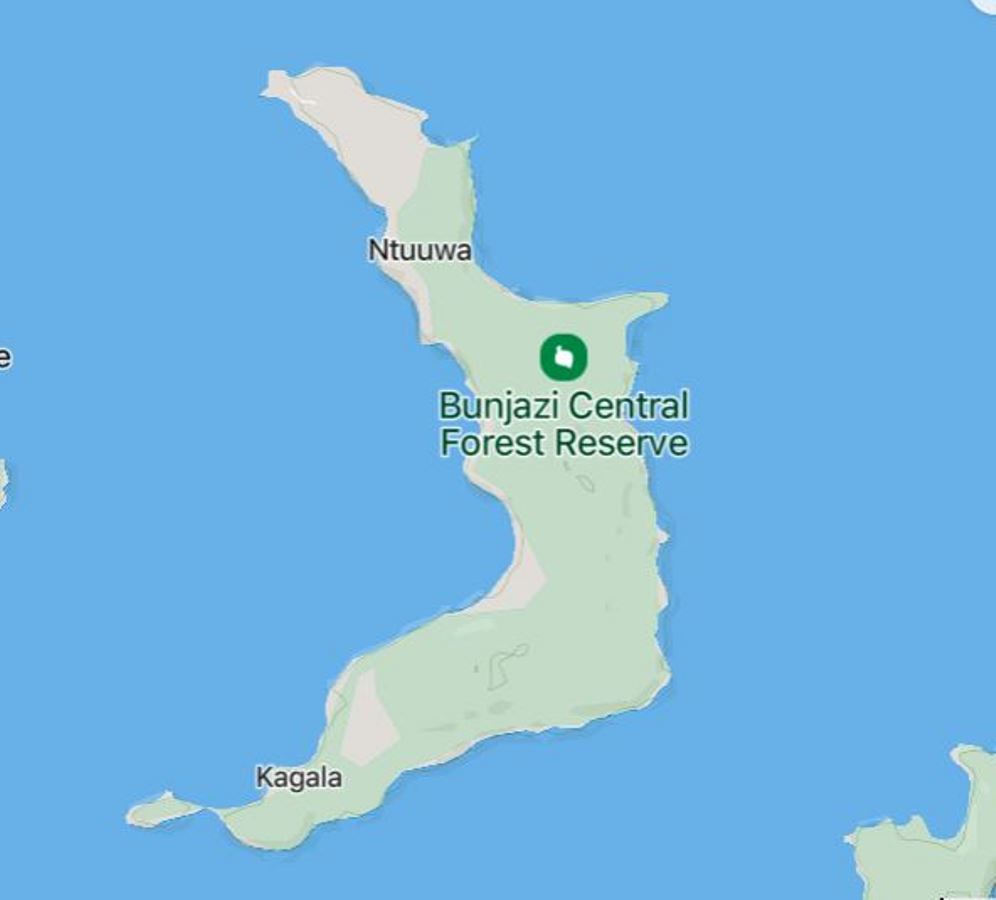
  • Photograph of a map showing the location of Bunjazi Central Forest Reserve on Bugala Island, Ssese Islands on Lake Victoria in Uganda
  • Description
  • Overview
  • Locations
  • Activities
  • Birding and wildlife
  • Areas of interest
  • Plan your trip

Bunjazi Central Forest Reserve, Ssese Islands | Uganda

The Bunjazi Central Forest Reserve is located on the Ssese Islands in Uganda, specifically in the Kalangala District. These islands are situated in the northwestern part of Lake Victoria.

The reserve is characterized as a medium-altitude moist forest, forming a belt along the lake and the lower ridges with a gentle slope from the lakeshore to the center.

Bunjazi Central Forest Reserve covers an area of 80 hectares.

Bunjazi Central Forest Reserve Location

The Bunjazi Central Forest Reserve is situated in the Kalangala District of Uganda, specifically within the Ssese Islands archipelago, a group of 84 islands located in the northwestern part of Lake Victoria.

The Ssese Islands are approximately 60 kilometers southwest of Entebbe, across the waters of Lake Victoria, making them accessible primarily by ferry or boat from the mainland.

The Bunjazi Central Forest Reserve is positioned on one of these islands, contributing to the region’s rich ecological and biodiversity profile.

Geographically, the reserve is characterized as a medium-altitude moist forest, with an elevation typically ranging between 1,100 and 1,200 meters above sea level.

Bunjazi Central Forest Reserve forms a forested belt along the lakeshore of Lake Victoria, extending along the lower ridges of the island with a gentle slope from the shoreline toward the interior.

This topography creates a unique microclimate conducive to the growth of dense, evergreen forest vegetation. The reserve spans an area of approximately 80 hectares, making it a relatively small but ecologically significant protected area within the Ssese Islands.

The Ssese Islands, including Bunjazi, are part of Uganda’s Central Region and are known for their lush, tropical environment, which supports a variety of flora and fauna.

The Bunjazi Central Forest Reserve is one of several forest reserves in the Kalangala District, which collectively play a critical role in conserving the region’s biodiversity, including rare plant species, birds, and primates such as the vervet monkey and the black-and-white colobus.

The forest’s proximity to Lake Victoria also influences its ecosystem, with the lake’s humid conditions fostering a moist forest environment that contrasts with the drier savanna landscapes found elsewhere in Uganda.

Administratively, the reserve falls under the management of the National Forestry Authority (NFA) of Uganda, which oversees its conservation and sustainable use.

The surrounding Ssese Islands are home to local communities that rely on fishing, agriculture, and tourism for their livelihoods, with the forest reserve serving as an important ecological and cultural asset. The islands are also a growing tourist destination, with attractions such as beaches, cultural sites, and other forest reserves complementing the ecological significance of Bunjazi.

Access to the Bunjazi Central Forest Reserve typically involves traveling to the Ssese Islands via ferry from Bukakata or Nakiwogo on the mainland, with Kalangala Town serving as the main hub on the islands. From there, local transportation or guided tours can provide access to the reserve.

The forest reserve’s location on the Ssese Islands makes it somewhat remote, preserving its natural state but also posing challenges for conservation efforts due to pressures from human activities such as agriculture and settlement expansion.

Bunjazi Central Forest Reserve History

The Bunjazi Central Forest Reserve, located on the Ssese Islands in the Kalangala District of Uganda, is a medium-altitude moist forest spanning approximately 80 hectares.

Situated in the northwestern part of Lake Victoria, it forms part of a unique ecological and cultural landscape within the Ssese archipelago.

This report explores the historical context of the Bunjazi Central Forest Reserve, tracing its origins, colonial influences, post-independence developments, conservation efforts, and contemporary significance.

While specific historical records on Bunjazi itself are limited, this report draws on broader historical patterns of Uganda’s forest reserves, particularly those managed by the National Forestry Authority (NFA), and integrates available information specific to the Ssese Islands and Bunjazi.

Pre-Colonial Period (Pre-1894)

Before European colonization, the Ssese Islands, including the area encompassing Bunjazi, were part of the Buganda Kingdom, a powerful centralized state in what is now central Uganda.

The islands held cultural and spiritual significance for the Baganda people, with forests like Bunjazi serving as natural habitats for diverse flora and fauna, including rare primates, birds, and butterflies.

The forests were likely used by local communities for resources such as timber, medicinal plants, and food, as well as for spiritual practices, given the islands’ association with traditional Buganda religious sites.

The Bunjazi forest, described as a medium-altitude moist forest, formed a belt along the lakeshore, with a gentle slope from Lake Victoria to the island’s interior, supporting a rich ecosystem.

During this period, the Ssese Islands were relatively isolated due to their location in Lake Victoria, which preserved their forests from extensive exploitation.

The Buganda Kingdom practiced sustainable resource use, with forests managed communally under customary land tenure systems.

There is little evidence of significant deforestation or large-scale agricultural encroachment in Bunjazi before colonial intervention, as the islands’ economy was primarily based on fishing and subsistence agriculture.

Colonial Era (1894–1962)

The establishment of British colonial rule in Uganda in 1894 marked a significant shift in land and forest management, including in the Ssese Islands.

The 1900 Uganda Agreement between the British and the Buganda Kingdom formalized land tenure systems, categorizing much of the land, including forests, as either Crown Land or under Buganda’s control through the mailo system.

Forests like Bunjazi were likely classified as Crown Land, bringing them under colonial administration. The British recognized the ecological importance of Uganda’s forests for timber production and environmental services, such as water regulation, prompting the establishment of forest reserves.

By the early 20th century, the colonial government began formalizing forest management. In 1929, a policy was introduced to reserve forests for sustainable timber production and environmental protection, leading to the designation of Central Forest Reserves (CFRs) like Bunjazi under the central government’s authority.

Smaller forests were designated as Local Forest Reserves (LFRs) managed by local governments. Bunjazi, with its modest 80-hectare area, was likely designated as a Central Forest Reserves (CFRs) due to its ecological value and strategic location along Lake Victoria.

The colonial administration prioritized forests for their economic potential, with timber harvesting becoming a regulated activity. However, the Ssese Islands’ isolation limited large-scale logging in Bunjazi compared to mainland forests like Budongo or Mabira.

The colonial period also saw the introduction of new agricultural practices and crops, which began to exert pressure on forested areas.

On the Ssese Islands, the expansion of agriculture and settlement slightly impacted forests like Bunjazi, though their remoteness offered some protection.

Additionally, the islands attracted explorers, such as Henry Morton Stanley, who reportedly camped near Lutoboka (a neighboring forest reserve) during his expeditions to the “Mountains of the Moon.”

While Stanley’s activities did not directly affect Bunjazi, they highlight the historical significance of the Ssese Islands as a point of interest during colonial exploration.

Post-Independence and Political Upheaval (1962–1986)

Uganda gained independence in 1962, and the management of forest reserves, including Bunjazi, continued under the newly formed central government.

The 1961 “New Buganda Agreement” transferred much of the Crown Land, including forests, to the Buganda Kingdom, except for those deemed nationally significant, such as Central Forest Reserves (CFRs).

Bunjazi remained a Central Forest Reserve, managed by the central government’s forestry department. However, the post-independence period was marked by political instability, particularly during the 1970s and 1980s, under regimes such as Idi Amin’s (1971–1979) and subsequent civil wars.

During this period, law and order broke down, and forest reserves across Uganda faced significant threats.

While mainland forests like Budongo experienced poaching, illegal logging, and chimpanzee smuggling, the Ssese Islands’ isolation likely shielded Bunjazi from the worst of these impacts.

Nonetheless, local communities on the islands may have increased resource extraction from Bunjazi for timber, fuelwood, and agricultural land due to economic hardship and lack of enforcement.

The forest’s biodiversity, including its populations of rare monkeys, birds, and butterflies, likely faced pressure, though specific records of Bunjazi’s status during this time are scarce.

Establishment of the National Forestry Authority (1986–Present)

The end of Uganda’s civil conflicts in 1986, with the rise of the National Resistance Movement under President Yoweri Museveni, ushered in a new era of forest conservation.

In the late 1980s, the government instituted a policy to dedicate half of Uganda’s forest reserves to sustainable timber production and the other half to environmental protection, with 20% designated as nature reserves.

This policy laid the groundwork for the establishment of the National Forestry Authority (NFA) in 2004 under the National Forestry and Tree Planting Act of 2003. The National Forestry Authority (NFA) was tasked with managing all 506 Central Forest Reserves, including Bunjazi, to ensure sustainable use and conservation.

Bunjazi, as a smaller Central Forest Reserve, was prioritized for environmental protection due to its ecological significance as a habitat for rare and endemic species.

The forest’s medium-altitude moist environment supports a variety of primates, such as vervet and colobus monkeys, as well as numerous bird and butterfly species.

The National Forestry Authority’s management focused on maintaining the forest’s integrity, developing eco-tourism, and engaging local communities in conservation efforts.

The Ssese Islands, including Bunjazi, were recognized for their tourism potential, with activities such as forest walks, bird watching, and primate identification promoted to visitors.

Conservation Challenges and Efforts

Despite its protected status, Bunjazi Central Forest Reserve faces ongoing challenges. The Ssese Islands have experienced population growth and increased agricultural activity, particularly palm oil plantations, which have led to deforestation pressures in the region.

While Bunjazi’s small size and island location offer some protection, encroachment for timber, fuelwood, and land remains a concern.

The National Forestry Authority (NFA) has implemented measures to combat illegal activities, such as patrolling and community engagement programs, but enforcement is challenging due to limited resources and the islands’ remoteness.

Eco-tourism has emerged as a key strategy for Bunjazi’s conservation. The forest’s trails, developed for non-strenuous walks, allow visitors to explore its biodiversity while generating revenue for conservation.

The National Forestry Authority (NFA), in collaboration with local communities and private developers, has promoted Bunjazi alongside other Ssese Island reserves like Lutoboka and Kampala as eco-tourism destinations.

Activities such as bird watching, primate identification, and butterfly spotting attract nature enthusiasts, while nearby beaches and cultural sites enhance the islands’ appeal. Accommodation options, ranging from lodges to budget guesthouses in Kalangala Town, support tourism development.

Research on Uganda’s forest reserves, including those on the Ssese Islands, has highlighted their ecological importance.

A 1991 study by the International Union for Conservation of Nature (IUCN) emphasized the biodiversity of Uganda’s tropical forests, and while Bunjazi was not specifically mentioned, its characteristics align with the moist forests studied.

The forest’s role in water regulation, given its proximity to Lake Victoria, and its support for endemic species make it a critical conservation site.

Partnerships with organizations like the International Union for Conservation of Nature (IUCN) and local Non-Government Organisations have supported reforestation and habitat restoration efforts in similar reserves, which may benefit Bunjazi in the future.

Contemporary Significance

Today, Bunjazi Central Forest Reserve remains a vital component of Uganda’s conservation landscape. Its 80-hectare area, though small compared to larger reserves like Budongo (82,530 hectares) or Mabira (30,600 hectares), is significant for its unique island ecosystem.

The forest contributes to the Ssese Islands’ reputation as a biodiversity hotspot and eco-tourism destination. Its medium-altitude moist forest supports a delicate balance of species, and its conservation is crucial for maintaining the ecological health of the Lake Victoria region.

The National Forest Authority continues to manage Bunjazi under a framework that balances conservation with sustainable use.

Community involvement is critical, as local residents participate in eco-tourism and conservation activities, reducing dependence on forest resources.

However, challenges such as climate change, invasive species, and potential land-use conflicts persist, necessitating ongoing vigilance and investment in conservation.

The history of Bunjazi Central Forest Reserve reflects broader trends in Uganda’s forest management, from pre-colonial communal use to colonial formalization, post-independence challenges, and modern conservation efforts.

As a small but ecologically significant reserve on the Ssese Islands, Bunjazi has been shaped by its isolation, cultural importance, and biodiversity.

The establishment of the National Forest Authority (NFA) and the focus on eco-tourism have bolstered its protection, but challenges remain. Continued efforts to engage local communities, promote sustainable tourism, and address environmental threats will be essential to preserving Bunjazi’s natural and cultural heritage for future generations.

Bunjazi Central Forest Reserve Map
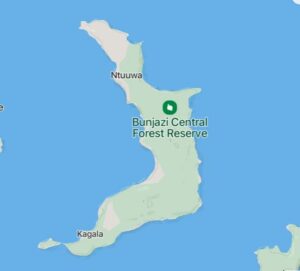
Photograph of a map showing the location of Bunjazi Central Forest Reserve on Bugala Island, Ssese Islands on Lake Victoria in Uganda
Photograph of a map showing the location of Bunjazi Central Forest Reserve on Bugala Island, Ssese Islands on Lake Victoria in Uganda. Photo Credit; Mapcarta

Overview

You will be redirected to cart shortly. Thank you for your patience.

Use the calendar below to book this cruise.

Today
Selected
Available
Unavailable

Who is checking in?

Please select number of adults and children checking into the cruise using the controls you see below.

Cabins

Select the amount of cabins you wish to book

Extra items

Please select the extra items you wish to be included with your booking using the controls you see below.

Item Price Per day? Per person? Quantity
Travel Insurance $ 22 Yes Yes

Summary

The summary of your cruise is shown below.

Cruise date
Cruise duration (days)
Reservation total
Extra items total
Total price
Show price breakdown
Reset Proceed

We are sorry, this cruise is not available to book at the moment

About

Full travel guide to Bunjazi Central Forest Reserve, Uganda; Bunjazi Central Forest Reserve Tourism - Start planning your journey now with our full travel guide. How to get to Bunjazi Central Forest Reserve and getting around, top must-visit cultural experiences in Bunjazi Central Forest Reserve, iconic nature and outdoor experiences in Bunjazi Central Forest Reserve, find top thrilling adventures to have in Bunjazi Central Forest Reserve. Bunjazi Central Forest Reserve stays near Bunjazi Central Forest Reserve - From budget to boutique, book a stay that best suits you online.

Africa

View all

UG

View all

Uganda

From the moment you land at Entebbe's modern and efficient international airport, with its breathtaking equatorial location on the forested shore of island-strewn Lake Victoria, it is clear that Uganda is no ordinary safari destination in Africa.

View all

Activities

Tourism Activities at Bunjazi Central Forest Reserve, Uganda

The following are the tourism activities available at Bunjazi Central Forest Reserve, highlighting their ecological, educational, and recreational value.

Guided Forest Walks

One of the primary tourism activities at Bunjazi Central Forest Reserve is guided forest walks, which allow visitors to explore the reserve’s lush, medium-altitude moist forest.

These walks are designed to be non-strenuous, making them accessible to a wide range of visitors, from families to avid nature enthusiasts. Key features of the guided walks include:

Scenic Trails:

The reserve features well-maintained trails that wind through dense forest, starting near the lakeshore of Lake Victoria and ascending gently toward the interior. The trails offer stunning views of the forest canopy, undergrowth, and glimpses of the lake, creating a visually immersive experience.

Wildlife Observation:

Guided walks provide opportunities to observe Bunjazi’s diverse wildlife, including vervet monkeys, black-and-white colobus monkeys, and a variety of birds such as hornbills and turacos.

Guides, often local community members or National Forest Agency rangers, are trained to spot animals and share insights about their behavior and ecological roles.

Birdwatching

Birdwatching is a popular activity at Bunjazi Central Forest Reserve, attracting both amateur and experienced birders. The reserve’s moist forest environment, influenced by its proximity to Lake Victoria, supports a diverse avian population. Key aspects of birdwatching in Bunjazi include:

Diverse Bird Species:

The forest is home to numerous bird species, including forest-dwelling birds like turacos, kingfishers, hornbills, and various weaver species. The dense canopy and undergrowth provide ideal habitats for these birds, making Bunjazi a hotspot for birdwatching.

Guided Birding Tours:

Specialized birdwatching tours are available, led by guides with expertise in identifying species by sight and sound.

These tours often take place in the early morning or late afternoon, when bird activity is highest, and may include visits to specific areas of the forest known for rare or endemic species.

Photography Opportunities:

The vibrant plumage and dynamic behavior of Bunjazi’s birds make it an excellent location for wildlife photography. Guides can help position visitors for optimal shots while ensuring minimal disturbance to the birds.

Birdwatching tours are typically 2 - 3 hours long and can be tailored to focus on specific species or to accommodate beginners.

This activity highlights Bunjazi’s role as a biodiversity haven and appeals to eco-tourists seeking a quiet, immersive experience.

Primate and Wildlife Viewing

Primate and wildlife viewing is a highlight of tourism at Bunjazi, given the reserve’s populations of vervet monkeys, black-and-white colobus monkeys, and other wildlife.

Cultural and Community Engagement

Bunjazi Central Forest Reserve is surrounded by communities on the Ssese Islands, particularly the Baganda people, who have a deep cultural connection to the forest and the archipelago.

Eco-Tourism and Conservation Education

Bunjazi Central Forest Reserve serves as a model for eco-tourism, with activities designed to promote conservation awareness while offering engaging experiences.

Eco-tourism activities are typically part of guided tours and can be tailored to specific interests, such as biodiversity research or environmental education. They underscore Bunjazi’s importance as a conservation site and engage visitors in its preservation.

Photography and Nature Appreciation

Bunjazi’s scenic beauty and biodiversity make it an ideal destination for photography and nature appreciation. This activity appeals to both amateur and professional photographers, as well as visitors seeking a tranquil connection with nature.

Combined Tours with Nearby Attractions

Bunjazi’s location on the Ssese Islands allows visitors to combine forest-based activities with other attractions in the archipelago for example Lutoboka Central Forest Reserve among others, creating a diverse tourism experience.

Reach out to us at Responsible Tourism Company for an unforgettable experience.

Suggested tours

Suggested tours to Bunjazi Central Forest Reserve, Uganda

Guided Forest Walks/Hiking tours

Primate Identification tours

Birdwatching tours

Birding and wildlife

Birding and Wildlife in Bunjazi Central Forest Reserve, Uganda

Nestled within the lush Ssese Islands archipelago in the Kalangala District of Uganda, the Bunjazi Central Forest Reserve is a small yet ecologically significant medium-altitude moist forest covering approximately 80 hectares.

Situated in the northwestern part of Lake Victoria, Bunjazi is a biodiversity hotspot that thrives due to its unique lakeside microclimate and gentle topography, which slopes from the shoreline to the island’s interior.

Managed by the National Forestry Authority (NFA), the reserve is a haven for birdwatchers, wildlife enthusiasts, and conservationists, offering opportunities to observe a rich array of avian species, primates, butterflies, and other wildlife.

This essay provides a detailed exploration of birding and wildlife in Bunjazi Central Forest Reserve, highlighting its ecological significance, the diversity of its fauna, key species, tourism activities, conservation efforts, and the broader context of its role within the Ssese Islands’ ecosystem.

Ecological Significance of Bunjazi Central Forest Reserve

The Bunjazi Central Forest Reserve’s ecological significance stems from its position as a medium-altitude moist forest, characterized by a humid microclimate influenced by Lake Victoria.

The forest forms a green belt along the lakeshore, with dense evergreen and semi-deciduous vegetation that supports a diverse ecosystem. Its proximity to the lake ensures high humidity, fostering lush flora that provides food, shelter, and breeding grounds for numerous species.

The gentle slope from the shoreline to the interior creates varied microhabitats, from lakeside undergrowth to towering canopies, which support a range of wildlife, particularly birds and primates.

As one of the Central Forest Reserves managed by the National Forest Authority (NFA), Bunjazi plays a critical role in conserving biodiversity, regulating water cycles, and preventing soil erosion in the Lake Victoria region.

Bunjazi Central Forest Reserve’s small size belies its importance as a sanctuary for rare and endemic species, making it a prime destination for birding and wildlife observation.

Birding in Bunjazi Central Forest Reserve, Uganda

Bunjazi Central Forest Reserve is a birdwatcher’s paradise, hosting a variety of avian species that thrive in its moist forest environment.

The dense canopy, rich undergrowth, and proximity to Lake Victoria create ideal conditions for both resident and migratory birds.

While specific species lists for Bunjazi are not extensively documented, the reserve’s characteristics align with those of other Ssese Island forests, such as Lutoboka, which are known to support diverse bird populations. Common species include forest-dwelling birds such as:

Turacos: The great blue turaco and Ross’s turaco, with their vibrant plumage and distinctive calls, are often spotted in the canopy. Their presence adds a splash of color to birding expeditions.

Hornbills: African grey hornbills and other hornbill species are frequent in Bunjazi, identifiable by their large bills and loud vocalizations.

Kingfishers: The forest’s proximity to Lake Victoria attracts kingfishers, such as the malachite and pied kingfishers, which can be seen near the lakeshore or along forest streams.

Weavers and Sunbirds: Colorful weaver birds, such as the village weaver, and iridescent sunbirds, like the scarlet-chested sunbird, add to the forest’s avian diversity.

Forest Specialists: Species like the African broadbill and green-backed woodpecker thrive in the dense forest, where they forage for insects and nest in tree cavities.

The variety of habitats within Bunjazi, from open lakeside areas to thick forest interiors, supports a mix of forest-dependent and edge species, making it an ideal location for birders seeking diverse sightings.

Wildlife in Bunjazi Central Forest Reserve, Uganda

Bunjazi is renowned for its primate populations, which are a major draw for wildlife enthusiasts. The reserve’s dense forest provides ample habitat for arboreal species, with the following primates being particularly notable:

Vervet Monkeys: These agile, social primates are commonly seen in Bunjazi, often moving in troops through the canopy. Their playful behavior and adaptability to various forest habitats make them a highlight of wildlife tours.

Black-and-White Colobus Monkeys: Known for their striking black fur and white mantles, colobus monkeys are a prized sighting. They are typically found in the upper canopy, where they feed on leaves and tender shoots, offering visitors a chance to observe their acrobatic movements.

Guided primate tracking tours allow visitors to observe these species in their natural environment. Guides use their knowledge of primate behavior to locate active groups, ensuring respectful observation practices that minimize disturbance.

These tours often include educational components, such as discussions about primate social structures and their ecological roles as seed dispersers.

Butterflies and Insects

Beyond primates, Bunjazi supports a vibrant population of butterflies and other insects, adding to its wildlife diversity.

The forest’s humid environment and diverse flora provide ideal conditions for lepidopterans and other invertebrates. Key features include:

Bunjazi is home to numerous butterfly species, some of which are endemic to the Ssese Islands. Their colorful wings and intricate patterns make them a favorite for wildlife enthusiasts and photographers.

The forest supports a variety of insects, including beetles, dragonflies, and moths, which contribute to its ecological complexity. These species are often highlighted during guided tours, particularly for visitors interested in macro photography or entomology.

Butterfly spotting is typically integrated into broader wildlife tours, with guides pointing out key species and explaining their life cycles and ecological significance.

Areas of interest

Areas of Interest in Bunjazi Central Forest Reserve, Uganda

The Bunjazi Central Forest Reserve, located on the Ssese Islands in the Kalangala District of Uganda, is a medium-altitude moist forest covering approximately 80 hectares.

Situated in the northwestern part of Lake Victoria, this reserve is part of the ecologically and culturally significant Ssese archipelago.

Despite its relatively small size, Bunjazi offers a range of areas of interest that attract eco-tourists, researchers, and conservationists.

These include its rich biodiversity, scenic forest trails, unique flora and fauna, cultural significance, and proximity to other attractions on the Ssese Islands.

The following are the key areas of interest within and around the Bunjazi Central Forest Reserve, highlighting the forest reserves' ecological, recreational, and cultural value.

Biodiversity and Wildlife

One of the primary areas of interest in Bunjazi Central Forest Reserve is its rich biodiversity, characteristic of a medium-altitude moist forest. The reserve’s humid, lakeside environment, shaped by its proximity to Lake Victoria and its gentle slope from the shoreline to the interior, supports a variety of plant and animal species. Key aspects of its biodiversity include:

Primates:

Bunjazi is home to several primate species, notably vervet monkeys and black-and-white colobus monkeys. These species are a major draw for visitors, who can observe them in their natural habitat during guided forest walks. The primates’ behavior, such as their social interactions and arboreal movements, adds to the reserve’s appeal for wildlife enthusiasts.

Birdlife:

The forest is a haven for birdwatchers, with numerous species thriving in its dense canopy and undergrowth. Notable birds include forest-dwelling species such as hornbills, turacos, and kingfishers, which benefit from the reserve’s moist ecosystem. The variety of bird calls and vibrant plumage make birdwatching a popular activity, with guided tours often available to identify species.

Butterflies and Insects:

Bunjazi’s lush vegetation supports a diverse population of butterflies, some of which are endemic to the Ssese Islands. The forest’s trails offer opportunities to observe colorful butterfly species, adding to the reserve’s ecological allure. Other insects, such as beetles and dragonflies, contribute to the forest’s vibrant ecosystem.

Flora:

The reserve’s medium-altitude moist forest features a mix of evergreen and semi-deciduous trees, as well as undergrowth rich in ferns, vines, and medicinal plants. The forest’s proximity to Lake Victoria creates a humid microclimate, fostering dense vegetation that supports its wildlife. Visitors can explore the diversity of plant life, including species used traditionally by local communities for medicine and crafts.

The biodiversity of Bunjazi makes it a critical site for conservation and research, with opportunities for visitors to engage in primate identification, birdwatching, and butterfly spotting. These activities are often guided by local experts or National Forestry Authority (NFA) staff, ensuring minimal disturbance to the ecosystem.

Scenic Forest Trails

Bunjazi Central Forest Reserve features well-maintained trails designed for non-strenuous walks, making it accessible to a wide range of visitors, from casual tourists to avid nature lovers.

These trails are a central area of interest, offering immersive experiences in the forest’s natural beauty. Key features of the trails include:

Lakeshore Pathways:

The trails often start near the lakeshore, where the forest forms a green belt along Lake Victoria. These paths provide scenic views of the lake and opportunities to observe the transition from aquatic to terrestrial ecosystems. The gentle slope of the terrain makes walking enjoyable, with shaded areas offering respite from the tropical sun.

Wildlife Viewing Points:

Specific sections of the trails are designated for wildlife observation, particularly for spotting primates and birds. These areas are strategically located in denser parts of the forest, where animals are most active. Signage or guides help visitors identify key species and learn about their ecological roles.

Educational Signage:

The National Forestry Authority (NFA) has introduced interpretive signage along some trails, providing information about the forest’s flora, fauna, and conservation efforts. These educational elements enhance the visitor experience, making the trails not only recreational but also informative.

The trails are typically short and well-marked, catering to eco-tourists seeking a low-impact way to explore the forest.

Guided tours, often led by local community members or NFA rangers, provide insights into the forest’s ecology and cultural significance, making the trails a highlight of any visit to Bunjazi.

Cultural and Historical Significance

The Bunjazi Central Forest Reserve holds cultural importance for the local communities of the Ssese Islands, particularly the Baganda people, who have historically inhabited the archipelago. This cultural dimension is an area of interest for visitors interested in Uganda’s heritage. Key aspects include:

Spiritual Sites:

The Ssese Islands are known for their spiritual significance within the Buganda Kingdom, with some forests, including Bunjazi, historically used as sites for traditional rituals and ceremonies.

While specific sites within Bunjazi may not be open to the public, guides often share stories about the forest’s role in local traditions, adding a cultural layer to the visitor experience.

Community Interaction:

The reserve is surrounded by communities that rely on fishing, agriculture, and tourism. Visitors can engage with local residents through guided tours or cultural experiences, such as learning about traditional uses of forest plants for medicine or crafts.

These interactions highlight the interdependence between the forest and the island’s inhabitants.

The Ssese Islands, including Bunjazi, were visited by European explorers like Henry Morton Stanley in the 19th century, adding a historical dimension to the region.

While Stanley’s activities were more closely associated with nearby Lutoboka Forest Reserve, the broader historical exploration of the islands enhances Bunjazi’s appeal as part of a culturally rich destination.

Cultural tours, often combined with forest walks, allow visitors to appreciate the interplay between Bunjazi’s natural environment and the traditions of the Ssese Islands’ communities.

Proximity to Other Ssese Island Attractions

Bunjazi’s location on the Ssese Islands places it near other notable attractions, making it part of a broader eco-tourism circuit. These nearby areas of interest enhance the reserve’s appeal as a destination. Key sites include:

Lutoboka Central Forest Reserve:

Located on the same island as Bunjazi, Lutoboka is another forest reserve known for its biodiversity and scenic trails. Visitors often combine trips to both reserves, as they offer similar yet complementary experiences, with Lutoboka also featuring primate and bird populations.

Beaches of Lake Victoria:

The Ssese Islands are renowned for their sandy beaches, such as those at Lutoboka Bay and Kalangala Town. These beaches, located near Bunjazi, provide a relaxing contrast to forest exploration, allowing visitors to enjoy water activities like swimming, fishing, or boat rides after a forest tour.

Cultural and Historical Sites:

The Ssese Islands feature cultural attractions, such as the Buganda Kingdom’s sacred sites and traditional fishing villages.

For example, the islands are home to the Nanziri Shrine, a spiritual site for the Baganda, which can be visited as part of a broader tour including Bunjazi.

Kalangala Town:

As the main hub of the Ssese Islands, Kalangala Town offers accommodation, dining, and access to ferries connecting the islands to the mainland. It serves as a base for exploring Bunjazi and other reserves, with lodges, guesthouses, and campsites catering to various budgets.

The proximity of these attractions makes Bunjazi an ideal stop within a multi-destination itinerary on the Ssese Islands, appealing to tourists seeking a mix of nature, culture, and relaxation.

Eco-Tourism and Conservation Activities

Bunjazi Central Forest Reserve is a focal point for eco-tourism and conservation efforts, which are themselves areas of interest for environmentally conscious visitors.

The National Forestry Authority manages the reserve to balance conservation with sustainable tourism, offering activities that engage visitors while protecting the forest. Key features include:

Guided Eco-Tours:

The National Forestry Authority (NFA) and local operators offer guided tours focused on conservation education. These tours highlight the importance of preserving Bunjazi’s ecosystem and provide insights into ongoing efforts to combat deforestation and encroachment.

Community-Based Tourism:

Local communities participate in tourism activities, serving as guides or hosts for cultural experiences. Revenue from tourism supports conservation initiatives and provides economic benefits to residents, fostering a sense of ownership over the forest’s preservation.

Research Opportunities:

Bunjazi’s biodiversity attracts researchers studying Uganda’s tropical forests. Visitors with an interest in ecology may encounter research teams or participate in citizen science activities, such as recording bird sightings or monitoring primate behavior.

These activities position Bunjazi as a model for sustainable tourism, where visitors can contribute to conservation while enjoying the forest’s natural beauty.

Scenic and Ecological Features

The reserve’s unique ecological features, shaped by its lakeside location and medium-altitude environment, are a significant area of interest. Key aspects include:

Lake Victoria Influence:

The forest’s proximity to Lake Victoria creates a humid microclimate, supporting lush vegetation and a vibrant ecosystem. The interplay between the lake and forest is visible along the trails, where visitors can observe how water influences plant and animal life.

Forest Canopy and Undergrowth:

The dense canopy and diverse undergrowth provide a visually striking environment, with tall trees, vines, and ferns creating a classic tropical forest experience. The canopy offers shade and habitat for wildlife, while the undergrowth is rich in smaller plants and insects.

Water Regulation Role:

As part of the Lake Victoria ecosystem, Bunjazi plays a role in regulating water cycles, preventing soil erosion, and maintaining the health of the lakeshore. This ecological function is of interest to visitors learning about environmental conservation.

These features make Bunjazi a visually and ecologically captivating destination, appealing to those interested in the interplay between terrestrial and aquatic ecosystems.

Getting there

Getting to Bunjazi Central Forest Reserve, Uganda

Bunjazi Central Forest Reserve is situated on Bugala Island, the largest and most developed of the 84 Ssese Islands, accessible only by water due to its location in Lake Victoria.

To Bugala Island: The primary access is via the MV Kalangala ferry from Nakiwogo (Entebbe) to Lutoboka (3.5 hours - 10,000 to 14,000 UGX/$2.70 to $3.80 USD) or free ferries (MV Pearl, MV Ssese) from Bukakata (Masaka) to Bugoma/Luku (30–50 minutes).

Private boats (1–2 hours, - $30 USD) are a faster but costlier option.

On Bugala Island: From Kalangala Town or Lutoboka, reach Bunjazi (5–10 km) by motorcycle taxi (boda-boda - UGX 5,000 to UGX 10,000 /$1.35–$2.70 USD), car taxi (UGX 20,000 to UGX 50,000 /$5.40 to $13.50 USD), or bicycle ($5 to $10 USD/day). Guided tours often include transport.

Book Cars + Hotels near Bunjazi Central Forest Reserve, Uganda

Get transportation and accomodation deals near Bungazi Central Forest Reserve when You Book Them together! Find deals from $50 per by comparing on Responsible Tourism Company. Visit our website. Responsible Tourism Company Rental Cars.

Getting around

Getting around the Bunjazi Central Forest Reserve, Uganda

Responsible Tourism Company provides ground transportation around the Bunjazi Central Forest Reserve.

Accommodation

BUNJAZI CENTRAL FOREST RESERVE ACCOMMODATION AND WHERE TO STAY NEAR BUNJAZI CENTRAL FOREST RESERVE, UGANDA

Mirembe Resort Beach Hotel Ssese Standard Twin Room

Ssese Islands

Mirembe Resort Beach Hotel Ssese Deluxe Room

Ssese Islands

Saffron Beach Resort and Adventure Park

Ssese Island, Bugala Island,

PLOT 94 BULIGO, Kalangala

Minjz Palm Beach Hotel - Kalangala

Bugala Island, Lutoboka Bay,

Kalangala

Mirembe Resort Beach Hotel,

Lutoboka Bay, Bugala Island

The address resort kalangala,

Bugala islands, Mandela road,

Kalangala

Brovad Sands Lodge Kalangala,

kalangala,

Ssese Islands Beach Hotel,

Lutoboka Road, Kalangala

Kalangala Lakeview Hotel,

Kalangala

Wamala Resort Hotel,

Kalangala

Philo Leisure Gardens,

Kalangala Road,

Ssese Islands,

Kalangala

Victoria Forest Resort,

Lutoboka, Bugala,

Ssese Islands

Kalangala Pearl Resort,

Bugala Ssese Islands,

Kalangala

Ssese Leisure Beach,

Kalangala Ssese Islands,

Lutoboka Landing Site,

Kalangala

Dream Land Guest House,

Main Street, Kalangala

Brovad Sands Lodge,

Colville Street,

Bwendero

Islands Peak Motel,

Kalangala

Panorama Cottages,

Kalangala

Islands Club,

Lutokoba Bay,

Kalangala

What to bring

What to Bring to Bunjazi Central Forest Reserve, Uganda

Clothing and Footwear:

Lightweight, breathable clothing suitable for warm weather.

Long-sleeved shirts and pants to protect against sun and insects.

Sturdy hiking boots or closed-toe shoes for walking safaris.

Rain Jacket or Poncho:

The weather can be unpredictable, so it’s good to be prepared for rain.

Sun Protection:

Wide-brimmed hat or cap.

Sunscreen with high SPF.

Insect Repellent:

Mosquito repellent to prevent bites.

Water and Snacks:

Carry a refillable water bottle to stay hydrated.

Energy bars or snacks for the journey.

Camera and Binoculars:

Capture wildlife moments and enjoy birdwatching.

Medications and First Aid Kit:

Any necessary medications.

Basic first aid supplies (bandages, antiseptic, etc.).

Enjoy your adventure in Lutoboka Forest Reserve!

Climate and when to visit

Climate and When to Visit Bunjazi Central Forest Reserve, Uganda

The Bunjazi Central Forest Reserve, an 80-hectare medium-altitude moist forest, is located on Bugala Island in the Ssese Islands archipelago, Kalangala District, in the northwestern part of Lake Victoria, Uganda.

The reserve’s unique lakeside environment and lush vegetation, influenced by its proximity to Lake Victoria, create a distinct microclimate that supports a rich ecosystem of primates, birds, butterflies, and diverse flora.

Understanding the climate of the Ssese Islands and its impact on Bunjazi Central Forest Reserve is essential for planning a visit, as weather patterns affect accessibility, trail conditions, and wildlife viewing opportunities.

This summary provides a detailed overview of the climate of Bunjazi Central Forest Reserve, the best times to visit, and practical considerations for optimizing a trip to this eco-tourism destination.

Climate of Bunjazi Central Forest Reserve, Uganda

Bunjazi Central Forest Reserve, situated on Bugala Island, experiences a tropical humid climate typical of the Lake Victoria region.

The climate is characterized by high humidity, warm temperatures, and significant rainfall, influenced by the lake’s moderating effect.

The Ssese Islands’ proximity to the equator (approximately 0° latitude) results in minimal temperature variation throughout the year, with distinct wet and dry seasons shaping the region’s weather patterns. Key features of Bunjazi’s climate include:

Temperature:

Average daytime temperatures range from 24°C to 28°C (75°F to 82°F), with nighttime lows rarely dropping below 18°C (64°F). The lake’s presence moderates temperatures, preventing extreme heat or cold. The forest’s dense canopy provides shade, making it feel cooler during walks, though humidity can make it feel warmer.

Humidity:

High humidity, often exceeding 80%, is a hallmark of Bunjazi’s climate due to Lake Victoria’s evaporative effect. The moist forest environment supports lush vegetation and abundant wildlife, but visitors should expect a humid, tropical atmosphere.

Rainfall:

The Ssese Islands receive substantial rainfall, averaging 1,500 - 2,000 mm annually. Rainfall is distributed across two wet seasons, with occasional showers during the dry seasons.

The lake’s influence can lead to sudden, localized rain showers, even outside peak wet periods.

Wet Seasons

March to May (Long Rains): This is the primary wet season, with heavy and frequent rainfall, often occurring in the afternoons or evenings. Monthly rainfall can exceed 200 mm, leading to muddy trails and potentially challenging conditions for accessing Bunjazi. The forest is at its greenest, with vibrant vegetation and active wildlife, but heavy rain can disrupt outdoor activities.

September to November (Short Rains): This secondary wet season brings moderate rainfall, typically lighter than the long rains, with monthly averages of 100–150 mm. Showers are often brief but can still affect trail conditions and ferry operations. The forest remains lush, and wildlife is active, though cloud cover may reduce visibility for birdwatching or photography.

Dry Seasons

December to February: This is the primary dry season, with minimal rainfall (30–50 mm per month) and mostly sunny days. Temperatures range from 25°C to 28°C (77°F to 82°F), with lower humidity, making it comfortable for outdoor activities. Trails are drier, and ferry services are more reliable, enhancing access to Bunjazi.

June to August: The secondary dry season also features low rainfall (40–60 mm per month) and warm, sunny weather. Conditions are similar to the primary dry season, though occasional showers may occur. This period is ideal for clear views and comfortable exploration of the forest.

Microclimate of Bunjazi Central Forest Reserve

Bunjazi’s location along the lakeshore creates a unique microclimate within the reserve. The forest’s proximity to Lake Victoria results in high humidity and frequent mist, especially in the mornings, fostering a moist environment that supports its evergreen and semi-deciduous vegetation.

The gentle slope from the lakeshore to the interior creates varied microhabitats, with denser, wetter vegetation near the lake and slightly drier conditions inland.

This microclimate supports the reserve’s biodiversity, including vervet and colobus monkeys, diverse bird species (e.g., turacos, hornbills), and butterflies, which thrive in the humid conditions.

However, the high humidity can make the forest feel warm and sticky, and sudden rain showers are possible year-round due to the lake’s influence.

When to Visit Bunjazi Central Forest Reserve, Uganda

The best time to visit Bunjazi Central Forest Reserve depends on weather preferences, wildlife viewing goals, and logistical considerations. Below is an analysis of the optimal times to visit, along with considerations for each season.

Optimal Times: Dry Seasons (December–February and June–August)

The dry seasons are widely regarded as the best times to visit Bunjazi Central Forest Reserve due to favorable weather, easier access, and optimal conditions for tourism activities.

December to February:

Advantages:

- Minimal rainfall (30–50 mm per month) ensures dry, stable trails, making forest walks, birdwatching, and primate viewing more comfortable.

- Clear skies and lower humidity enhance visibility for photography and wildlife observation.

- Ferry services (e.g., MV Kalangala from Nakiwogo to Lutoboka) are reliable, with calm lake conditions reducing the risk of delays.

- Wildlife, including birds and primates, is active and easier to spot due to less dense foliage and concentrated activity near water sources.

- This period coincides with Uganda’s peak tourism season, with more frequent tours and accommodation availability (though booking ahead is advised).

June to August:

Advantages:

- Similar to December–February, this season offers low rainfall (40–60 mm per month), dry trails, and pleasant temperatures (24°C–27°C, 75°F–81°F).

- Slightly fewer tourists compared to December–February, potentially offering a quieter experience and easier access to guides or tours.

- Wildlife remains active, with birds and primates easily visible. The forest’s lush greenery, sustained by residual moisture from the wet season, enhances its scenic beauty.

- Lake conditions are generally calm, ensuring smooth ferry or boat travel to Bugala Island.

Secondary Option: Wet Seasons (March–May and September–November)

While the wet seasons are less ideal due to heavy rainfall and potential logistical challenges, they offer unique advantages for certain travelers.

March to May (Long Rains):

Advantages:

- The forest is at its greenest, with vibrant vegetation and abundant water sources attracting wildlife, particularly birds and amphibians.

- Fewer tourists result in a more serene experience and potentially lower accommodation rates.

- The lush environment enhances photography, especially for capturing the forest’s vivid colors and active wildlife.

Challenges:

- Heavy rainfall (200+ mm per month) can make trails muddy and slippery, complicating forest walks and wildlife viewing.

- Ferry services may face delays due to rough lake conditions, and local roads on Bugala Island can become difficult to navigate, especially for boda-bodas or bicycles.

- High humidity and frequent showers require waterproof gear and flexible itineraries.

Best for: Budget travelers, photographers seeking lush landscapes, or those prioritizing solitude over convenience.

September to November (Short Rains):

Advantages:

- Moderate rainfall (100–150 mm per month) is less intense than the long rains, with brief showers that often occur in the afternoons, leaving mornings free for activities.

- The forest remains lush, and wildlife is active, with migratory birds potentially present.

- Fewer crowds and lower costs compared to dry seasons.

Challenges:

- Trails may still be muddy, and sudden showers can disrupt outdoor plans.

- Lake conditions can be unpredictable, affecting ferry schedules.

- Cloud cover may reduce visibility for birdwatching or photography.

Best for: Visitors comfortable with occasional rain and those interested in observing the forest’s peak greenery or migratory birds.

Year-Round Considerations

Bunjazi Central Forest Reserve is accessible year-round, as its biodiversity, including primates, birds, and butterflies, remains active regardless of season.

The forest’s microclimate ensures consistent wildlife sightings, though the dry seasons offer the easiest access and most comfortable conditions.

Visitors should be prepared for sudden showers, even in dry seasons, due to Lake Victoria’s influence, and plan activities for early mornings to avoid afternoon heat or rain.

The climate of Bunjazi Central Forest Reserve, characterized by warm temperatures, high humidity, and distinct wet (March to May, September to November) and dry (December to February, June to August) seasons, shapes the visitor experience.

The dry seasons are the optimal times to visit, offering dry trails, reliable ferry access, and comfortable conditions for exploring the reserve’s biodiversity through activities like birdwatching, primate tracking, and forest walks.

The wet seasons, while challenging due to rain and muddy conditions, provide lush scenery and fewer crowds, appealing to budget travelers or those seeking a vibrant forest experience.

With proper planning, choosing the right season, packing appropriate gear, and arranging transportation and tours, visitors can fully enjoy Bunjazi’s ecological and scenic treasures.

The reserve’s accessibility year-round, combined with its unique microclimate and proximity to Lake Victoria, makes it a rewarding destination for eco-tourists exploring the Ssese Islands.

  • Bunjazi Central Forest Reserve, Ssese Islands | Uganda

    Kalangala District, Ssese Islands, Uganda
    From $

    Discover the Wonders of Bunjazi Central Forest Reserve with Responsible Tourism Company: Your Ultimate Guide to Unforgettable Adventures, Scenic Landscapes, and Cultural Treasures. Book online or call: +256 704 023 485

    • Uganda
    Send inquiry
  • Connect with us on Social Media

  • About us
    • Background
    • Why Us?
    • Meet the Team
    • Responsible Travel
    • Tours and Activities
    • Transportion
  • Resources
    • Travel USA
    • Travel Tips
    • Contact Us
    • Travel Blog
    • Gallery
    • Webmail
  • Trip Styles
    • Adventure
    • Culture and Life
    • Safaris and Gorillas
    • Travel with purpose
    • Hiking & Trekking
    • Mountain and Volcanoe Climbing
  • Experiences
    • Tours
    • Custom itineraries
  • Payment Methods

© 2013 - 2025 Responsible Tourism Company

  • Terms and Conditions
  • Privacy Policy
x

Log in

Forgot your password?

x

Register



Click to chat