
Sipi Travel Guide, Uganda – East Africa
Sipi Town, nestled in the scenic highlands of eastern Uganda near the slopes of Mount Elgon, is a charming rural settlement in Kapchorwa District, renowned as the gateway to the spectacular Sipi Falls.
This small, vibrant town sits at an elevation of approximately 1,800 meters, surrounded by lush coffee plantations, rolling hills, and breathtaking views of the cascading waterfalls that draw visitors from around the world.
Home to the Sabiny and Bagisu communities, Sipi Town offers a rich cultural tapestry, with warm hospitality, traditional practices, and a deep connection to the land, particularly through its famous Arabica coffee production.
As a hub for adventure seekers, nature lovers, and those seeking an authentic Ugandan experience, Sipi Town combines natural beauty, cultural heritage, and a serene atmosphere, making it an ideal base for exploring the region’s waterfalls, hiking trails, and local traditions.
Location of Sipi Town, Uganda
Sipi Town is located in the Eastern part of Uganda, approximately 277 kilometers from Kampala, the capital city. It lies in Kapchorwa District and is situated on the foothills of Mount Elgon, near the border with Kenya.
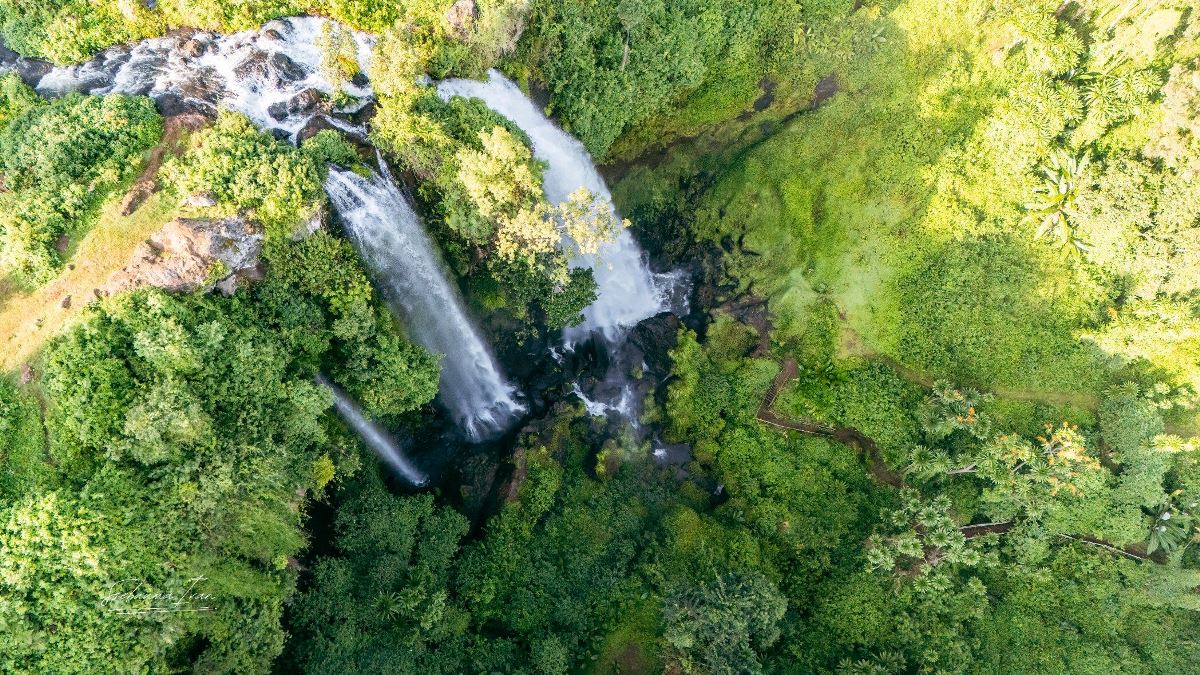
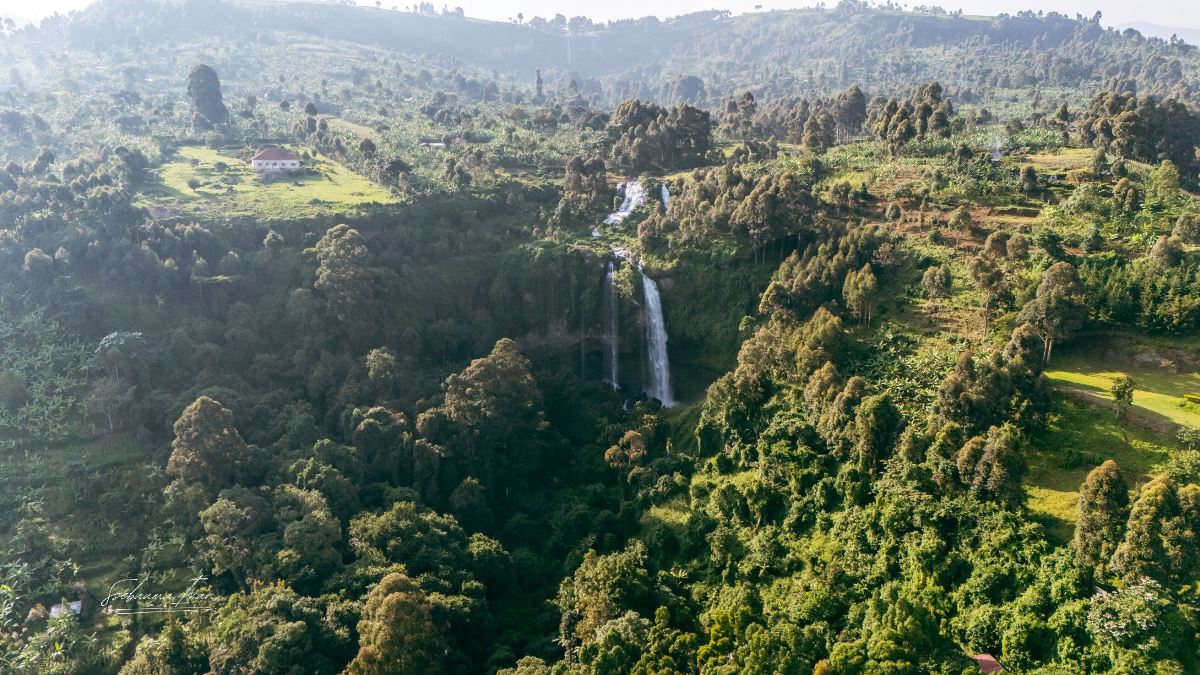
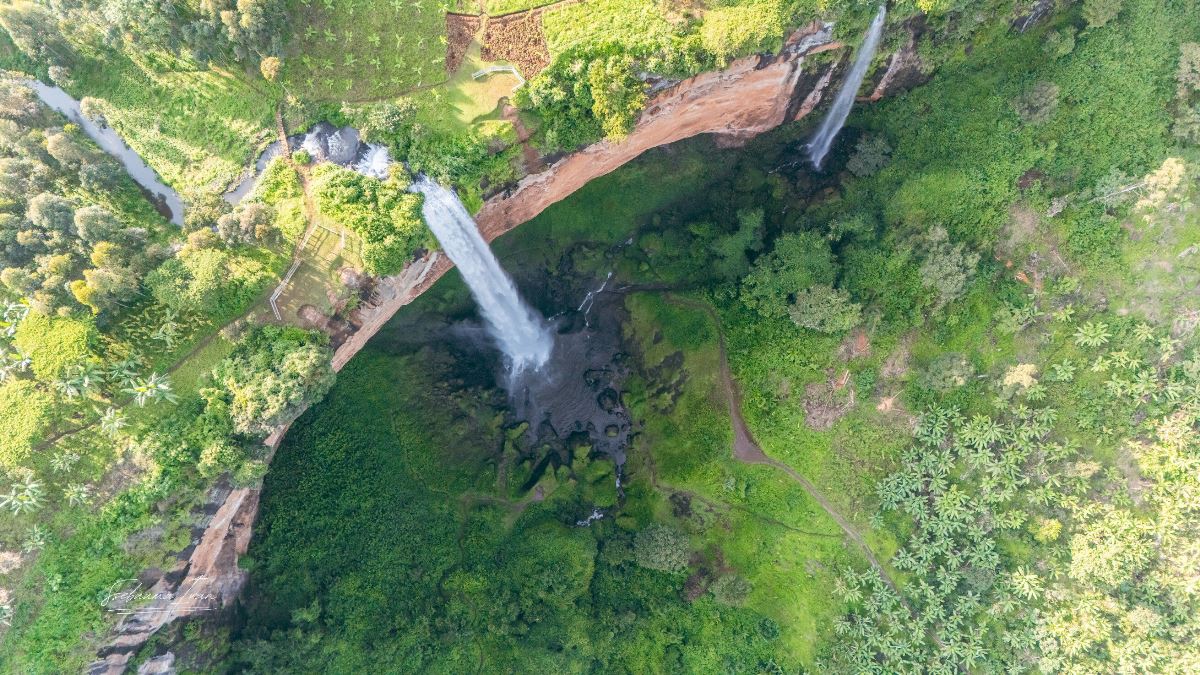
The town is renowned for its Sipi Falls, a series of three waterfalls that offer breathtaking views and a romantic escape which are;
- Main Falls (Sipi Falls): The largest of the three, with a drop of 100 meters (312 feet).
- Simba Falls: Located further upstream to the East, with a drop of 74 meters (243 feet).
- Ngasire Falls: Positioned even higher uphill, with a drop of approximately 85 meters (262 feet)
The nearby communities, including the Sabiny and Bagishu people, engage in farming activities, particularly growing Arabica coffee among others.
Population of Sipi Town, Uganda
The estimated population of Sipi in 2020 was approximately 5,500, according to UBOS.
History of Sipi Town, Uganda
The term “Sipi” likely originates from the local word “sep,” which refers to an indigenous plant resembling a wild banana.
This plant grows along the banks of the Sipi River. Interestingly, European travelers who couldn’t pronounce “sep” ended up naming the falls and the river as “Sipi.”
Legend has it that British travelers approached a woman picking the Sep plant and asked for the name of the beautiful falls they were viewing.
The following is a deep dive into the history of Sipi Town;
Sipi Town, perched on the eastern slopes of Mount Elgon, has evolved from a quiet highland settlement into a vibrant hub of coffee cultivation and eco-tourism.
The town’s story intertwines indigenous heritage, colonial economic shifts and modern conservation efforts.
The area around today’s Sipi was traditionally inhabited by the Sabiny (also spelled Sebei) people, who practiced mixed farming, kept small herds and wove strong social bonds through clan lineage and age-set systems.
The town and its famous river take their name from the local word sep, an indigenous plant resembling a wild banana that grows abundantly along the riverbanks.
Locally, the sep plant served both medicinal and ritual purposes, treating fevers and measles and marking boundary sites for clans.
The Sipi River, draining the upper slopes of extinct Mount Elgon, carved the three majestic falls that give the town its identity.
As the river cut through volcanic basalt, plunge pools and steep gorges formed, attracting small hamlets of Sabiny farmers who settled on the fertile terraces below.
Over generations, these early settlers pioneered irrigated gardens and built stone-lined channels to harness the river’s flow for crops.
With the advent of British administration in the early 20th century, roads and mission stations began to penetrate Elgon’s foothills.
Colonial agronomists identified the rich volcanic soils as ideal for Arabica coffee, introducing seedlings in the 1930s and 1940s.
Coffee soon supplanted subsistence grains as the principal cash crop, linking remote Sipi growers to markets in Mbale and Kampala.
A small trading post emerged where farmers delivered cherry for processing and exchanged goods brought in by lorries.
After Uganda’s independence in 1962, Sipi Town remained modest until the late 1980s, when word of its waterfalls reached international guidebooks.
The formal gazetting of Mount Elgon as a national park spurred conservation awareness, and local entrepreneurs began welcoming trekkers, birders and coffee aficionados.
Mud-brick homes along the main road were converted into guesthouses, and village youths trained as guides to lead waterfall hikes and farm tours.
Today, Sipi Town balances its dual heritage of coffee and nature tourism. Roasters source “Bugisu Arabica” directly from smallholders, while eco-lodges fund reforestation and river-bank restoration projects.
Community associations run handicraft cooperatives, market local honey and coordinate homestays that immerse visitors in Sabiny culture.
Though the population and infrastructure have grown, strict park buffers ensure that the falls’ dramatic cascades remain as they have been for millennia.
From its sep-named riverbanks to today’s bustling coffee trails and waterfall vistas, Sipi Town’s history is one of adaptation, melding ancestral wisdom, colonial legacies and eco-innovations into a unique highland tapestry.
Attractions and Tourism Activities in Sipi Town, Uganda
Thomas Coffee Plantation Tours:
Explore coffee farms and learn about the coffee-making process.
Sipi Falls Tours:
You will get to discover the stunning Sipi Falls and a series of three waterfalls.
Mulima Mountain Adventures:
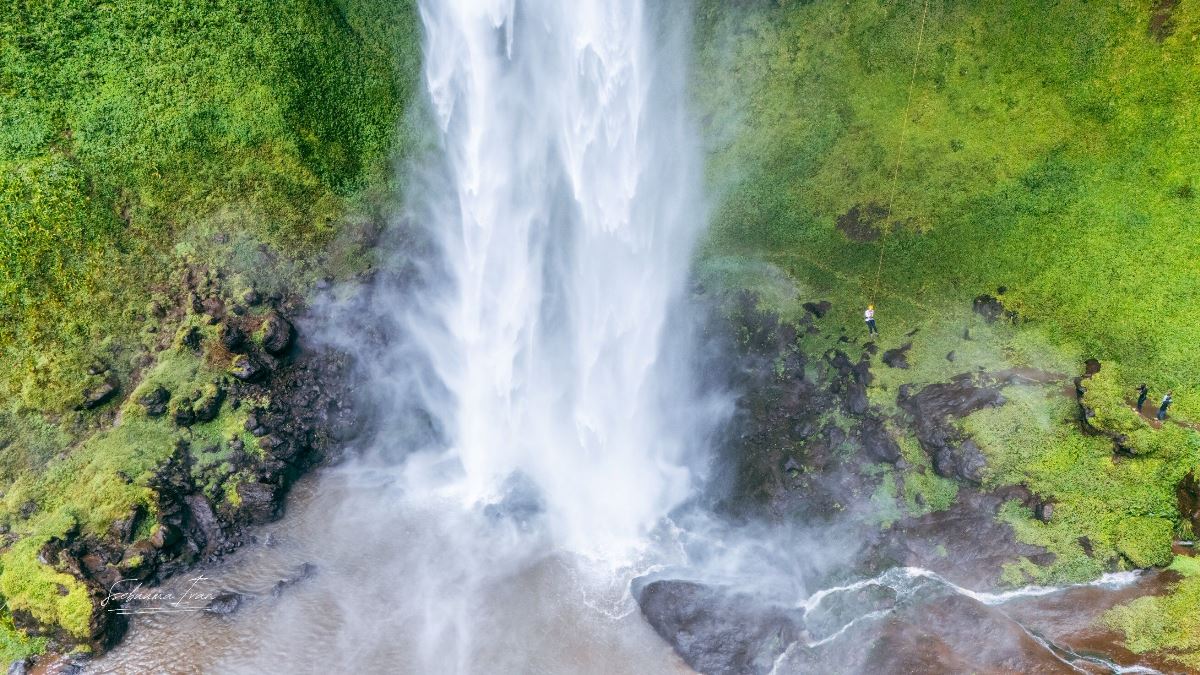
Experience exhilarating waterfall abseiling in the Chebonet gorge and Sipi Falls.
Mt. Elgon Hikes Uganda:
Embark on hiking adventures around Sipi Falls, including visits to the three waterfalls.
Sipi Falls Uganda Tours:
Engage with the local community and explore the beauty of Sipi Falls.
Massif Montane Expedition:
Enjoy hiking, abseiling, and wildlife experiences in the area.
Elgon Trek:
Take part in multi-day tours to explore the region further
Mountain Biking and Jogging:
Enjoy outdoor activities in the scenic surroundings.
Bird Watching:
Observe the diverse birdlife in the area.
Rock Climbing and Cave Adventures:
For thrill-seekers, there's rock climbing and cave exploration.