Baha’i Temple, Kampala | Uganda Attractions
Baha'i Temple Location in Uganda
The Baha'i Temple, also known as the "Mother Temple of Africa," is a prominent spiritual and cultural landmark located in Kampala, Uganda.
Bahai Temple’s strategic position on Kikaaya Hill enhances its visibility and accessibility, offering a serene retreat from the bustling capital city.
Below is a comprehensive summary of the Bahai Temple’s location, including its geographical context, accessibility, surrounding environment, and practical details for visitors.
Baha'i Temple Geographical Context
The Baha'i Temple is situated on Kikaaya Hill in the Kikaaya neighborhood, approximately three miles (4.8 km) north of Kampala’s city center along Gayaza Road. The temple’s coordinates are roughly 0.3522° N, 32.5944° E.
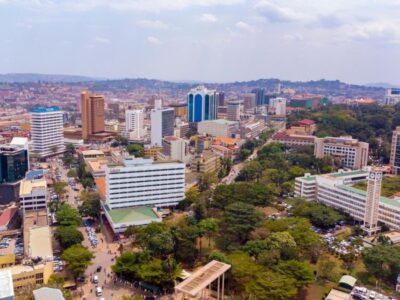
Elevation: Perched at an elevation of about 130 feet (40 meters) above the surrounding landscape, the temple enjoys a commanding position, offering panoramic views of Kampala’s seven hills and parts of the city skyline. On clear days, visitors may glimpse distant Lake Victoria.
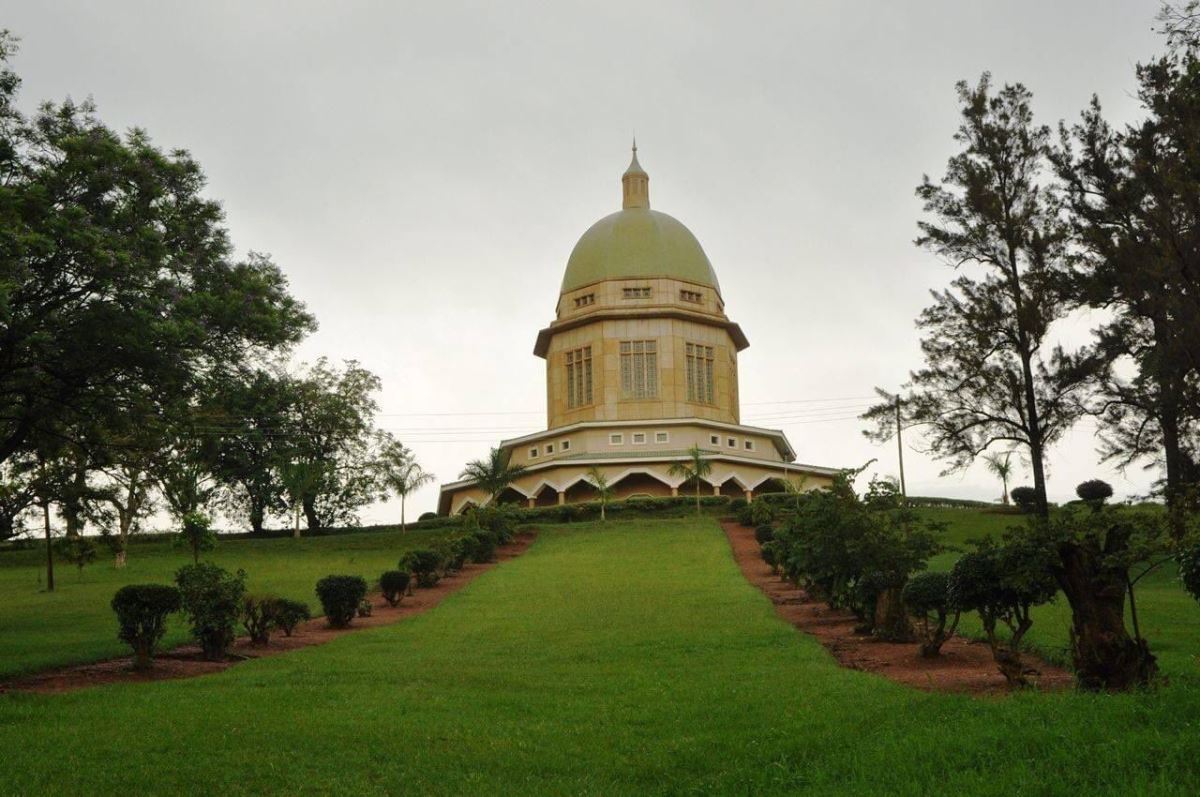
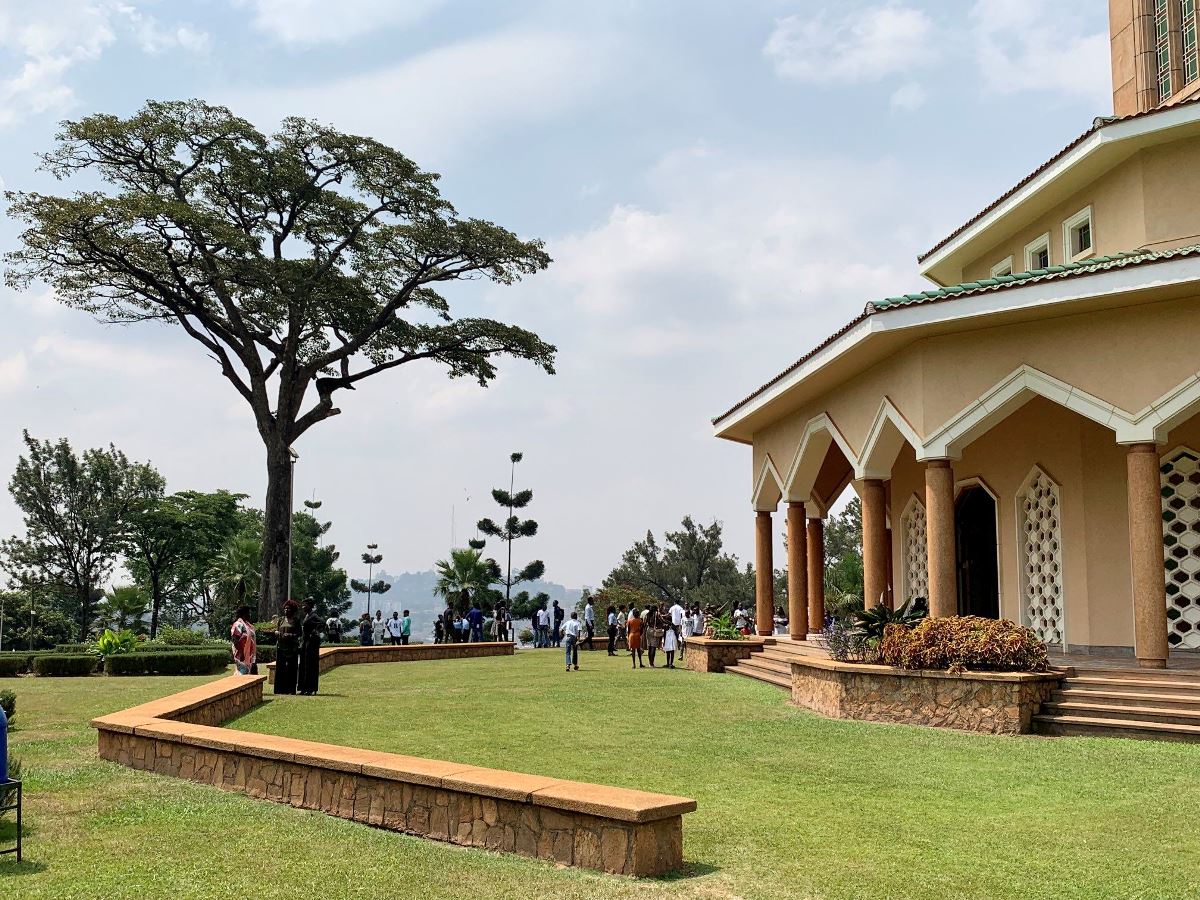
Setting: The temple occupies 52 acres of lush, well-maintained grounds, featuring manicured lawns, flowering shrubs, fruit trees (e.g., mango, avocado), and indigenous vegetation. This expansive green space creates a tranquil oasis, contrasting with Kampala’s urban environment.
Proximity to Key Landmarks: The temple is located near several notable sites in Kampala, including the Uganda National Museum (approximately 3.5 km away), the Gaddafi National Mosque (about 5 km), and the Kasubi Tombs (around 6 km).
Facts about Bahai Temple in Uganda
The Baha'i Temple in Kampala, Uganda, known as the "Mother Temple of Africa," is located on Kikaaya Hill, 3 miles from the city center.
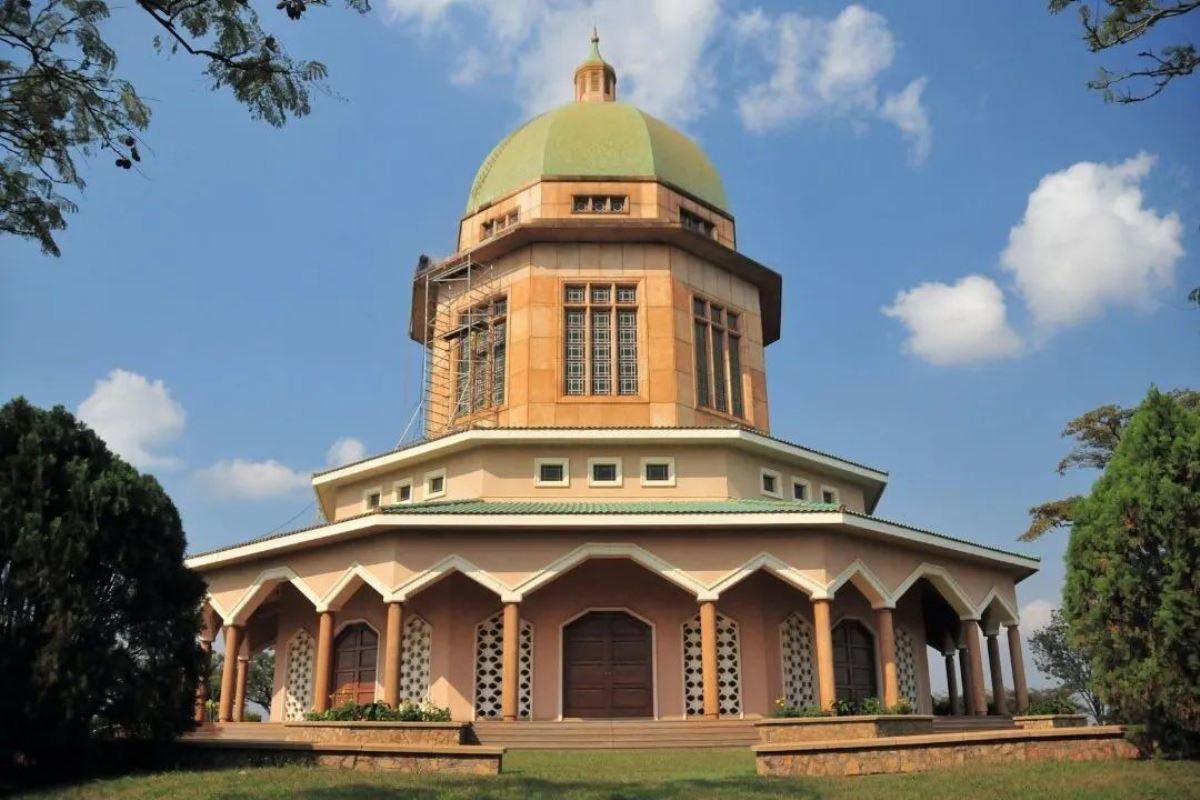
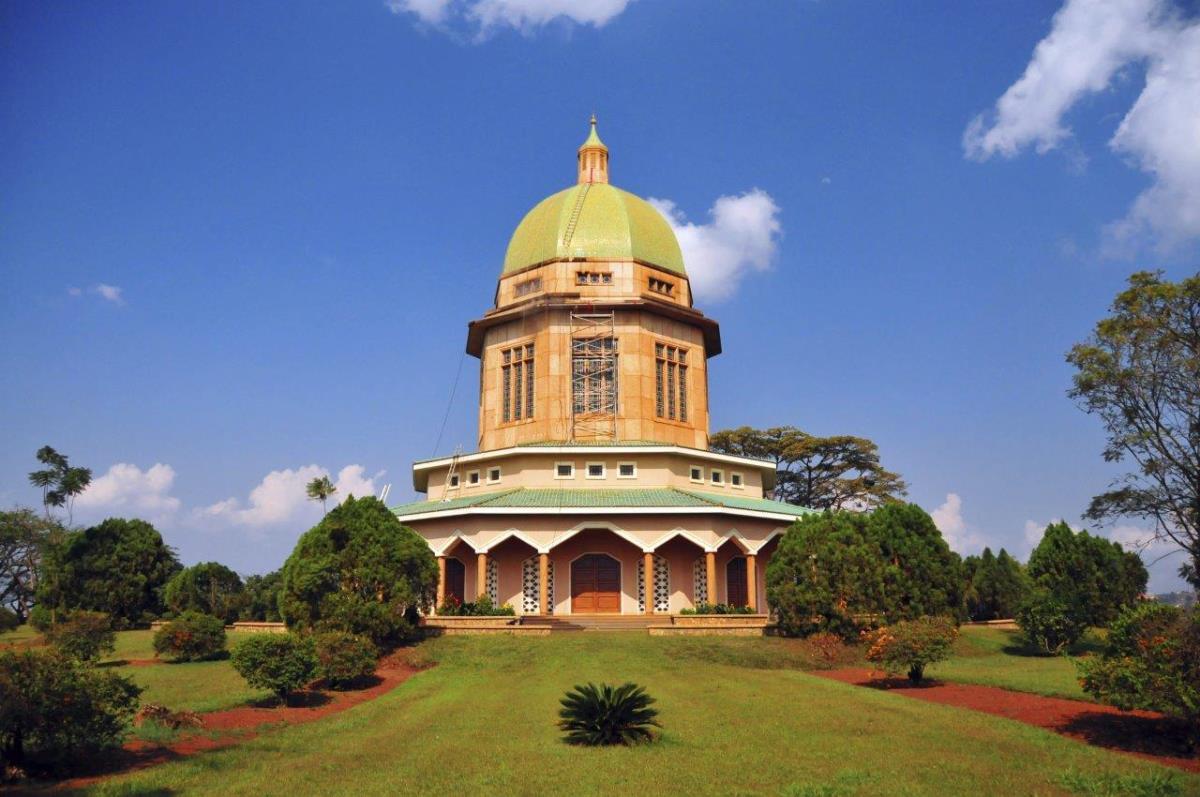
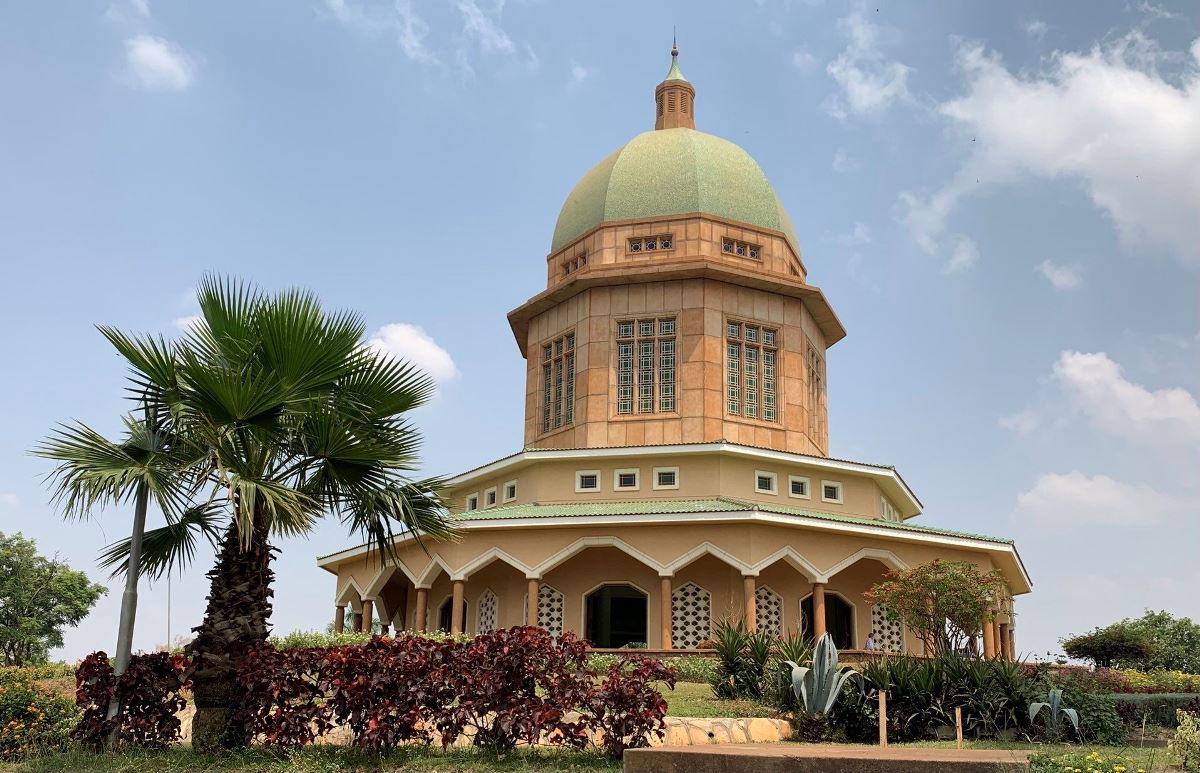
Dedicated in 1961, this is the first Baha’i temple in Africa, designed by Charles Mason Remey with a nine-sided structure and green-tiled dome, symbolizing unity.
Baha’i Temple, set on 52 acres hosts over 100 bird species and offers free entry, daily prayer sessions, and a Sunday service at 10:30 AM.
Open to all faiths, this temple is a hub for spiritual, cultural, and nature-based activities, with panoramic views of Kampala.
Visitors must dress modestly and respect rules like no indoor photography.
What is the distance of Baha’i Temple from Entebbe International Airport?
Baha’i Temple is approximately 46.5 km (29 miles) from Entebbe International Airport, Uganda’s main international gateway.
Accessibility of Baha’i Temple, Uganda
The Baha'i Temple is easily accessible from both Kampala and Entebbe, making it a convenient destination for local and international tourists. Several transportation options are available:
- From Kampala City Center:
Distance: Approximately 3 miles (4.8 km), a 15–20-minute drive depending on traffic.
By Car:
Visitors can take Gayaza Road, a major route heading north from Kampala. The road is paved and well-maintained, leading directly to Kikaaya Hill. The temple is clearly signposted, and parking is available on-site.
By Public Transport:
Matatus (Minibus Taxis):
Affordable shared taxis operate along Gayaza Road from Kampala’s city center (e.g., Old Taxi Park) to Kikaaya.
The ride costs approximately UGX 2,000–3,000 (less than $1 USD) and takes 20–30 minutes. From the Kikaaya drop-off point, the temple is a short walk (5–10 minutes).
Boda-Bodas (Motorcycle Taxis):
A faster option for solo travelers, boda-bodas cost around UGX 5,000–10,000 ($1.50–3 USD) from the city center to the temple. Riders should ensure helmets are provided for safety.
Walking:
While possible, walking from the city center is not recommended due to the distance and busy traffic along Gayaza Road.
- From Entebbe International Airport:
Distance: Approximately 46.5 km (29 miles), a 45-minute to 1-hour drive via the Entebbe–Kampala Express Highway, a modern toll road that has significantly reduced travel time.
By Car:
Taxis or private transfers from the airport cost around UGX 50,000–100,000 ($15–30 USD), depending on the vehicle and negotiation. Car rental services are also available at the airport for those preferring to drive.
By Public Transport:
Matatus from Entebbe to Kampala (e.g., to the New Taxi Park) take about 1–1.5 hours and cost UGX 5,000–7,000 ($1.50–2 USD). From Kampala, visitors can transfer to a Kikaaya-bound matatu or boda-boda.
Shuttle Services:
You can also opt for private transportation by booking our car rental services.
Guidelines for Baha’i Temple Visitors
Dress Code:
Modest attire (covering shoulders and knees) is required to respect the spiritual environment.
Prohibited Activities:
No smoking, alcohol, or drugs are allowed. Visitors must avoid picking plants, disturbing wildlife, or littering.
Photography:
Permitted in the gardens and exterior areas but prohibited inside the temple. Silence mobile phones to maintain tranquility.
Baha’i Temple Nearby Attractions:
Uganda National Museum (3.5 km): This museum offers insights into Uganda’s history and culture.
Gaddafi National Mosque (5 km): The mosque features a minaret with panoramic city views.
Kasubi Tombs (6 km): A UNESCO World Heritage Site showcasing Buganda Kingdom history.
Entebbe Botanical Gardens (40 km): These gardens are ideal for additional nature and birdwatching experiences.
Strategic Importance of the Location of Baha’i Temple, Uganda
Spiritual Significance:
As the first Baha’i house of worship in Africa, the temple’s location on Kikaaya Hill symbolizes this attraction’s role as a beacon of unity, visible from much of Kampala.
Baha’i Temple’s elevated, open setting aligns with the Baha’i principle of inclusivity, welcoming visitors of all faiths.
Tourism Appeal:
The temple’s proximity to Kampala’s city center and Entebbe makes it an accessible day trip for tourists, while its natural beauty and serene ambiance offer a contrast to urban exploration.
Ecological Value:
The 52-acre grounds serve as a green lung in Kampala, supporting biodiversity and providing a peaceful retreat for birdwatching, nature walks, and relaxation.
History of Baha'i Temple, Uganda
The Baha'i Temple in Kampala, Uganda, known as the "Mother Temple of Africa," is a significant spiritual and architectural landmark located on Kikaaya Hill, approximately three miles from the city center.
As the first Baha’i house of worship in Africa, its history is intertwined with the spread of the Baha’i faith in the continent, the vision of its global leadership, and its enduring role as a symbol of unity and inclusivity.
Below is a comprehensive summary of the temple’s history, covering its origins, construction, cultural significance, and ongoing legacy.
Origins of the Baha'i Faith in Uganda
The Baha’i faith, founded in 1844 by Siyyid ‘Alí-Muhammad (the Báb) and later led by Mírzá Husayn-‘Alí Núrí (Bahá’u’lláh) in Persia, emphasizes the oneness of God, religion, and humanity.
Baha’i faith’s message of unity and equality resonated in diverse regions, including Africa, where it began to spread in the early 20th century.
The Baha’i faith reached Uganda in the early 1950s during a period of global expansion initiated by Shoghi Effendi, the Guardian of the Baha’i Faith (1921–1957).
In 1951, as part of the Ten-Year Crusade (1953–1963), a global plan to spread the faith, Shoghi Effendi encouraged Baha’i pioneers to establish communities in Africa.
Uganda, with its cultural diversity and strategic location in East Africa, was identified as a key region for establishing a Baha’i presence.
Among the first Baha’i pioneers to Uganda were Ali and Violette Nakhjavani, a Persian couple, and Enoch Olinga, a Ugandan convert who became a prominent figure in the faith.
Olinga, later designated a “Hand of the Cause” for his contributions, played a pivotal role in spreading Baha’i teachings across East Africa.
By 1952, the first Baha’i Local Spiritual Assembly was established in Kampala, laying the foundation for a permanent house of worship.
The decision to build the first Baha’i temple in Africa in Uganda was influenced by the country’s central location, its growing Baha’i community, and the relatively stable political climate under British colonial rule in the 1950s. Kampala’s cosmopolitan nature and accessibility made it an ideal site.
Planning and Construction the first Baha’i temple in Africa in Uganda (1954–1961)
The construction of the Baha'i Temple in Kampala was a landmark project, reflecting the faith’s commitment to establishing houses of worship (Mashriq al-Adhkár) as places for prayer and community gathering open to all faiths.
In 1954, the Baha’i community acquired a 52-acre plot on Kikaaya Hill, a scenic, elevated location three miles north of Kampala’s city center along Gayaza Road.
The hill’s prominence, offering panoramic views of Kampala’s seven hills, symbolized the temple’s role as a spiritual beacon for Africa.
The site’s natural beauty, with its potential for lush gardens, aligned with the Baha’i vision of integrating worship with nature.
The temple was designed by Charles Mason Remey, an American Baha’i architect who also designed the Baha’i temple in Sydney, Australia.
The design adhered to the Baha’i requirement for houses of worship to have nine sides and a central dome, symbolizing the unity of the world’s major religions.
The Kampala temple’s design combined modern engineering with aesthetic simplicity, featuring a green-tiled dome, nine arched entrances, and a circular prayer hall.
Baha’i Temple Construction Process:
Construction began in 1958 under the supervision of the Baha’i community, with funding from global Baha’i contributions, reflecting the faith’s collaborative ethos.
Local materials, such as concrete and mosaic tiles, were used to ensure durability in Uganda’s tropical climate.
The project faced challenges, including logistical difficulties in transporting materials to the hilltop site and coordinating an international team.
Despite these, the temple was completed in **January 1961**, a testament to the dedication of the Baha’i community and local workers.
The construction incorporated sustainable practices, such as preserving the site’s natural vegetation, which later became a haven for over 100 bird species and other wildlife.
Dedication of the Baha’i Temple, Uganda
On January 15, 1961, the temple was officially dedicated in a ceremony attended by Baha’i representatives from across Africa and beyond, including Hand of the Cause Enoch Olinga.
The event marked a historic milestone, as the temple became the first Baha’i house of worship in Africa and the fourth globally, following temples in Wilmette (USA), Sydney (Australia), and Frankfurt (Germany).
Baha’i Temple Architectural and Symbolic Significance
The Baha'i Temple’s design and location were deeply symbolic, reflecting the faith’s core principles:
Nine-Sided Structure:
The nine sides represent the unity of the world’s major religions, with nine entrances welcoming people of all faiths. The circular layout fosters inclusivity, with no designated altar or clergy, emphasizing equality in worship.
Green Dome:
The dome, covered in green mosaic tiles, symbolizes harmony with nature and the spiritual aspirations of humanity. Its height (approximately 130 feet) makes it a visible landmark across Kampala.
Gardens:
The 52-acre grounds, with manicured lawns, fruit trees, and indigenous plants, embody the Baha’i principle of environmental stewardship and provide a serene setting for prayer, meditation, and community activities.
Baha’i Temple Historical Role and Cultural Impact
Since its dedication, the Baha'i Temple has served as a spiritual and cultural hub, contributing to Uganda’s religious and social landscape.
Spiritual Center:
As the “Mother Temple of Africa,” it has been a focal point for Baha’i worship and community activities across the continent. It hosts daily prayer sessions (approximately three per day) and a Sunday service at 10:30 AM, featuring scripture readings from various religions and a cappella hymns, open to all visitors.
Community Engagement:
The temple has supported Baha’i initiatives in education, literacy, and social development, such as youth empowerment programs and interfaith dialogues.
Baha’i Temple’s inclusive ethos has attracted diverse visitors, fostering cultural exchange in Kampala.
Resilience Through Political Changes:
Uganda’s history includes periods of political instability, notably under Idi Amin’s regime (1971–1979), during which religious institutions faced restrictions.
The Baha’i community, known for its non-political stance, maintained the temple’s operations, ensuring its role as a sanctuary. The temple’s grounds remained a peaceful retreat, even during turbulent times.
Cultural Events:
The temple hosts significant Baha’i observances, such as the Twin Holy Birthdays (October/November), celebrating the births of Bahá’u’lláh and the Báb.
These events draw local and international visitors, enhancing the temple’s cultural significance.
Baha’i Temple Ongoing Legacy and Modern Relevance
Tourism and Recognition:
Today, the Baha'i Temple is a major tourist attraction in Kampala, drawing visitors for its architectural beauty, serene gardens, and spiritual ambiance.
The temple’s free entry and welcoming policy align with the Baha’i principle of universal access.
The temple’s 52-acre grounds are a biodiversity hotspot, hosting over 100 bird species, vervet monkeys, and butterflies, making it a haven for nature lovers.
Conservation Efforts:
The temple’s commitment to environmental stewardship is evident in its pesticide-free gardens and preservation of native flora, setting a model for urban conservation in Kampala.
Global Context:
As one of only ten Baha’i houses of worship worldwide (as of 2025), the Kampala temple holds a unique place in the global Baha’i community.
Baha’i Temple’s history reflects the faith’s growth in Africa, with Uganda remaining a key center for Baha’i activities.
Recent Developments at Baha’i Temple, Uganda
The temple continues to serve as a venue for interfaith gatherings, educational workshops, and community outreach, reinforcing its role as a symbol of unity.
This temple’s maintenance and operations are supported by the global Baha’i community, ensuring its pristine condition and accessibility.
When does the Baha'i Temple open for visitors?
The temple is open daily from 8:00 AM to 6:30 PM, except on Mondays. A Sunday service is held at 10:30 AM, open to all, featuring scripture readings and hymns.
Is entry to the Baha'i Temple free or paid for?
Admission is free, reflecting the Baha’i commitment to accessibility. Donations are not accepted, emphasizing the temple’s non-commercial ethos.
Bahá'í Temples in Africa
How many Baha'i Temples are there in Africa?
There are two Baha'i temples in Africa:
- The Baha'i Temple in Kampala, Uganda, known as the "Mother Temple of Africa," dedicated in 1961.
- A local Baha'i house of worship in Matunda Soy, Kenya, dedicated in 2018.