
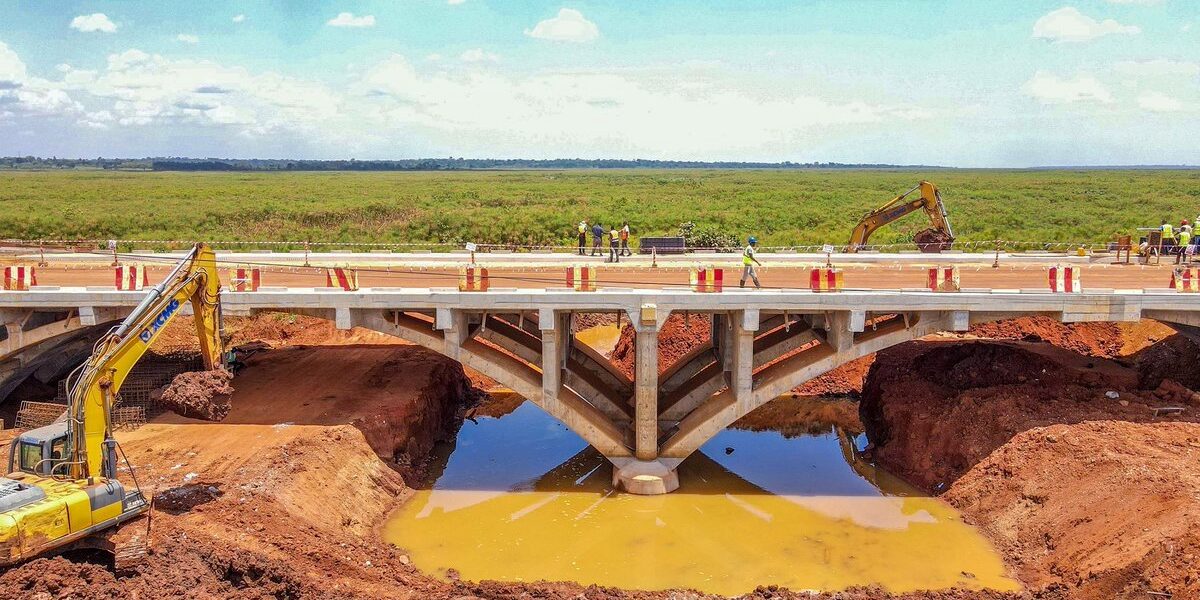
Uganda’s Ministry of Works and Transport has announced that the new Ssezibwa Bridge on the Kampala-Gayaza-Kalagi-Kayunga Road has reached 76% completion.
The main structure and all box culverts are now finished, marking a major milestone in the upgrade of this important transport corridor.
A Landmark Climate-Resilient Design
The new Ssezibwa Bridge is a distinctive 60-metre, two-span reinforced-concrete arch structure, the first of its kind in Uganda.
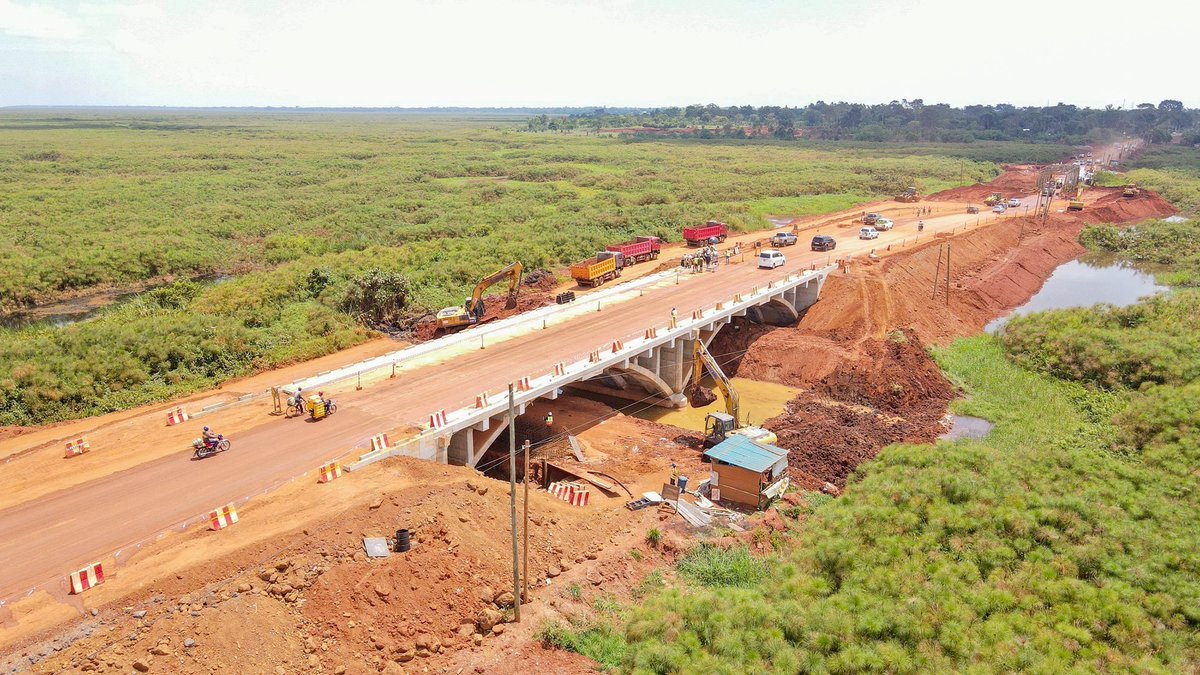
The new bridge design replaces the old 38-metre bridge built in 1953/1954, which had deteriorated and been restricted to light vehicles due to flooding, scour, and structural decay.
Key design features of the new Ssezibwa Bridge include:
- Prominent curved reinforced-concrete arches that provide greater under-clearance for water and vegetation.
- An overall width of 11 metres to accommodate modern traffic, including heavy vehicles.
- Elevated bridge and approach levels designed for a 1-in-200-year flood event.
- Four multi-barrel (three-cell) concrete box culverts that help distribute floodwaters across the swampy crossing.
- Deep foundations extending approximately 25 metres to rock for greater resistance against scour.
The full project covers 1.6 km, including raised and realigned approaches reinforced with geogrid and protected by a combination of bio-engineering and hard armouring.
The new Ssezibwa Bridge is engineered for a 120-year design life and will restore free movement of both passenger and freight traffic along the Kalagi-Kayunga corridor.
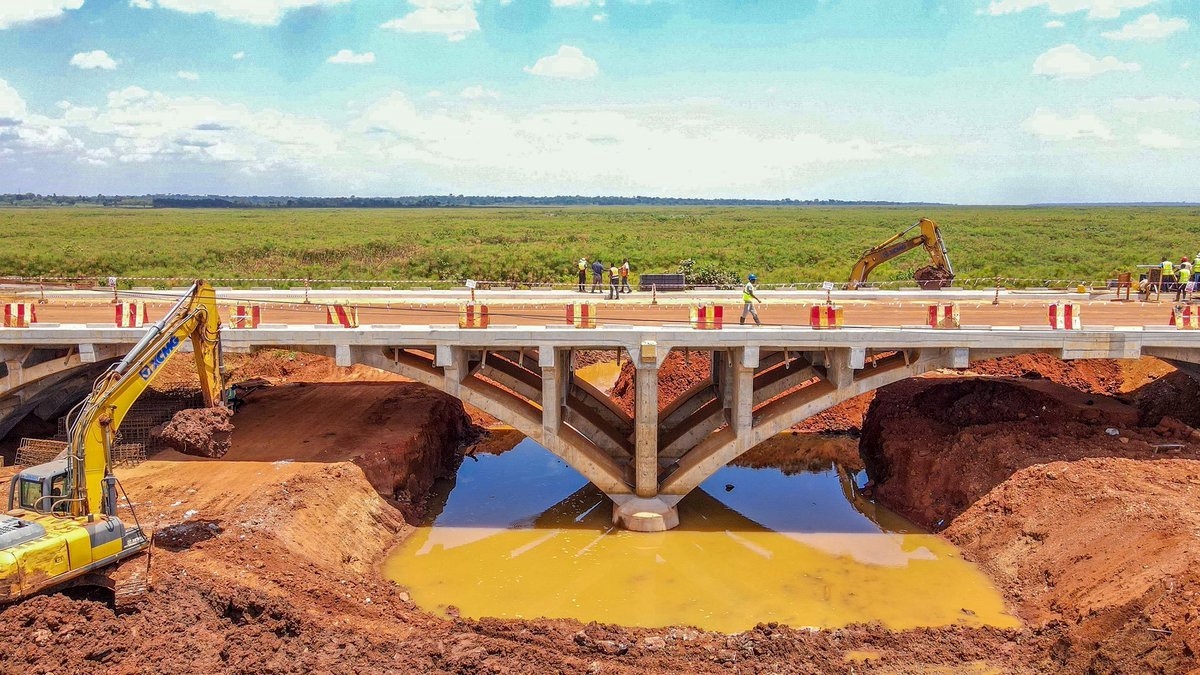
Construction is being delivered under a design-and-build arrangement by local contractor Dynaco Ltd, with design review and supervision by Professional Engineering Consultants (PEC).
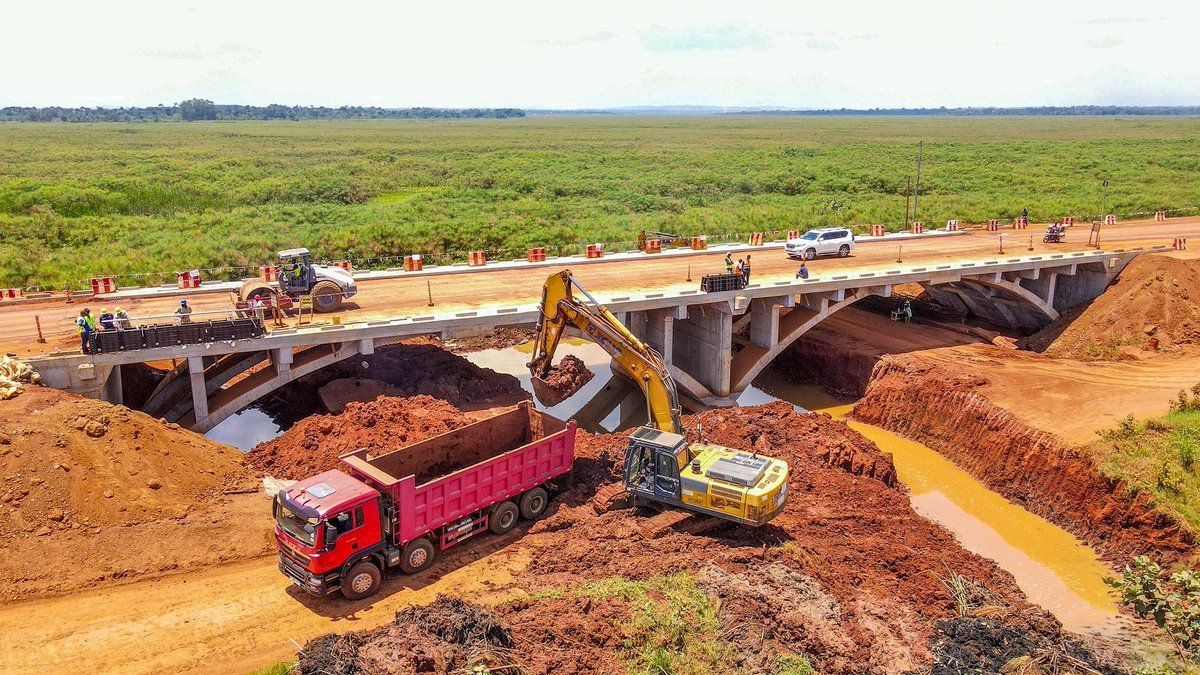
Remaining works include embankment construction, demolition of the old bridge, pavement layers, and final surfacing.
Why This Matters for Travellers
Once completed, the new Ssezibwa Bridge will significantly improve journey reliability and safety on the route linking Kampala to Kayunga and surrounding areas.
The previous Ssezibwa Bridge frequently suffered from flooding and restrictions, causing delays for both residents and visitors.
The upgraded crossing will make road travel smoother for those heading toward eastern and central Uganda destinations, supporting both everyday mobility and tourism-related movement in the region.
Supporting Better Travel Experiences
Improved infrastructure of this kind reduces travel time uncertainty and enhances access to secondary destinations beyond the main safari circuits.
Reliable roads encourage more flexible itineraries and make it easier for visitors to combine urban, cultural, and nature-based experiences.
Better roads and resilient bridges help create more comfortable and efficient travel across Uganda.
Planning your next Uganda Safari
Whether you are planning a journey through the central region or a wider Uganda itinerary, Responsible Tourism Company Ltd can arrange reliable private transport, well-paced routes, and responsible travel experiences that take advantage of improving infrastructure.
Check out our Uganda Safari Packages below;
- 2 Days Kibale National Park Chimpanzee Tracking & Bigodi Swamp Eco Safari
- 5-Day Fort Portal, Semuliki, Kibale & Queen Elizabeth National Park Safari
- 4 Days Fort Portal City, Semuliki & Queen Elizabeth National Park Tour
- 5 Days Uganda Gorilla Tracking & Queen Elizabeth National Park Safari
- 5 Day Kibale, Queen Elizabeth & Lake Mburo National Parks Tour
- 3 Days Queen Elizabeth National Park Safari
Contact us at Responsible Tourism Company Ltd to plan your next trip with comfort and sustainability in mind.
Call/WhatsApp: +256 704 023 485
Visit www.responsibletourismcompany.com
Email: info@responsibletourismcompany.com
Frequently Asked Questions (FAQs)
What is the current status of the new Ssezibwa Bridge?
As of mid-September 2026 the project has reached 76% completion, with the main structure and all box culverts finished.
What makes the new Ssezibwa Bridge special?
This is Uganda’s first 60-metre two-span reinforced-concrete arch bridge, designed for climate resilience, higher flood capacity, and a 120-year service life.
How does it improve on the old bridge?
The old 38-metre Ssezibwa Bridge from the 1950s suffered from flooding, foundation issues, and restricted use. The new structure is wider, higher, and engineered to handle extreme flood events.
Will the New Ssezibwa bridge benefit travellers?
Yes. The new Ssezibwa Bridge will restore full traffic capacity on the Kampala-Gayaza-Kalagi-Kayunga corridor, reducing delays and improving safety and reliability for both local and visiting travellers.
How can I plan travel that uses improved roads like this?
Responsible Tourism Company Ltd can help design itineraries that make the best use of Uganda’s upgrading road network while prioritising comfort and responsible practices.
The new Ssezibwa Bridge represents an important step in strengthening Uganda’s transport infrastructure.
The new bridge’s climate-resilient design and increased capacity will deliver long-term benefits for connectivity, safety, and the ease of travel along a key central corridor.
You can also check out our recent blog posts;
UWA Open Park Days 2026: Free Entry Sparks Huge Turnout Across Uganda’s Savannah Parks
High Travel Costs Threaten Uganda-Kenya Tourism Growth | Uganda & Kenya Tourism
Run 4 Birds Kampala 2026 | Join Uganda’s Eco-Run to Protect the Crested Crane