
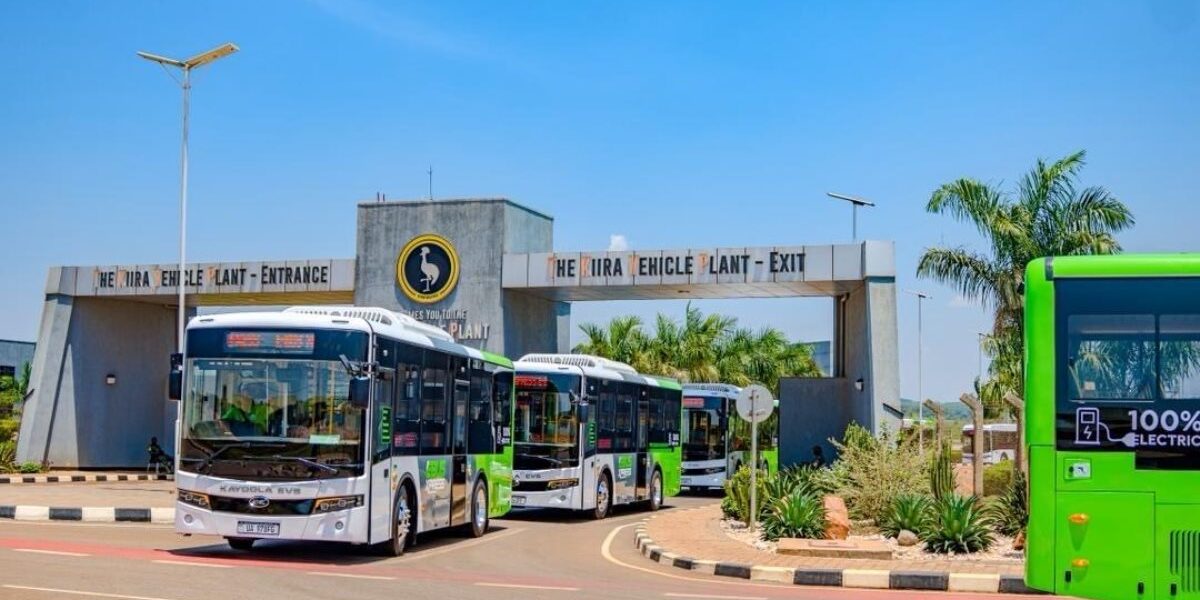
The official commissioning of the Kayoola Electric Buses on 28th August 2026 marks a meaningful advance for sustainable urban mobility in Uganda.
Fifteen 42-passenger Kayoola 7M EVS buses, developed by Kiira Motors Corporation and operated by E-Bus Xpress, are now serving three key corridors linking Kira Municipality with Ntinda and the wider Kampala metropolitan area.
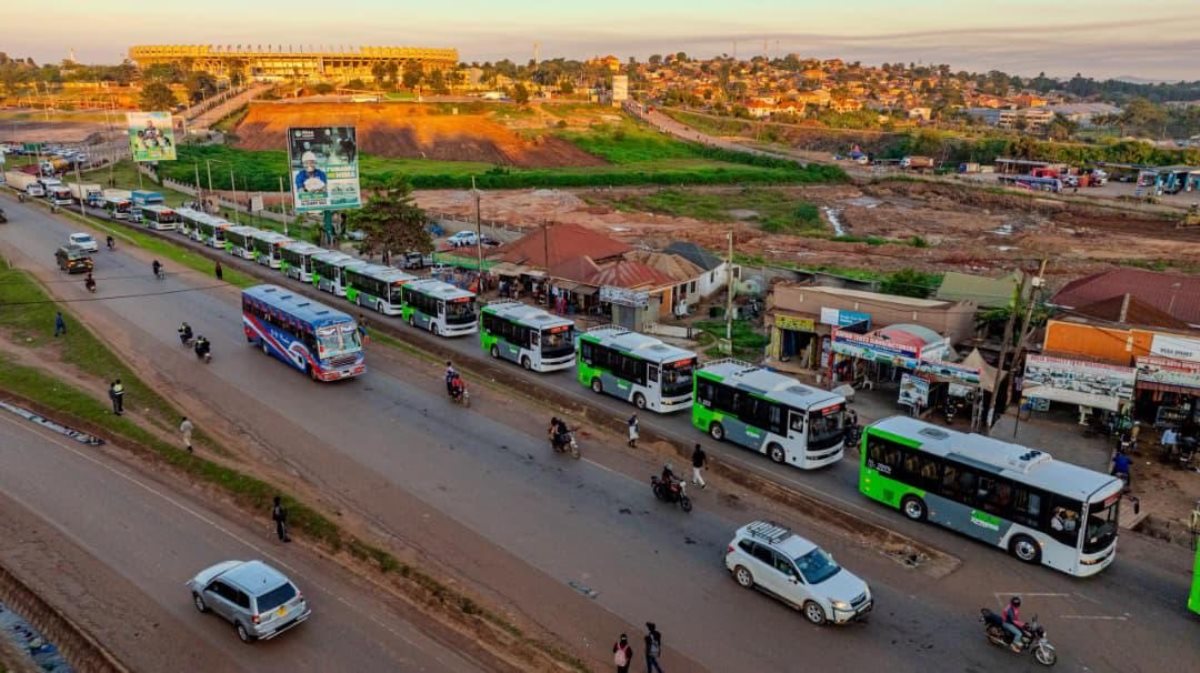
The Kampala electric buses, which arrived at the launch site yesterday, mark a further step in Uganda’s transition to smart, sustainable and locally developed public transportation. They will operate on three key corridors:
- Ntinda – Najjera – Kira – Kitukutwe – Kiwologoma – Nakwero
- Ntinda – Naalya – Kyaliwajjala – Namugongo – Sonde
- Ntinda – Kisasi – Kyanja – Kungu
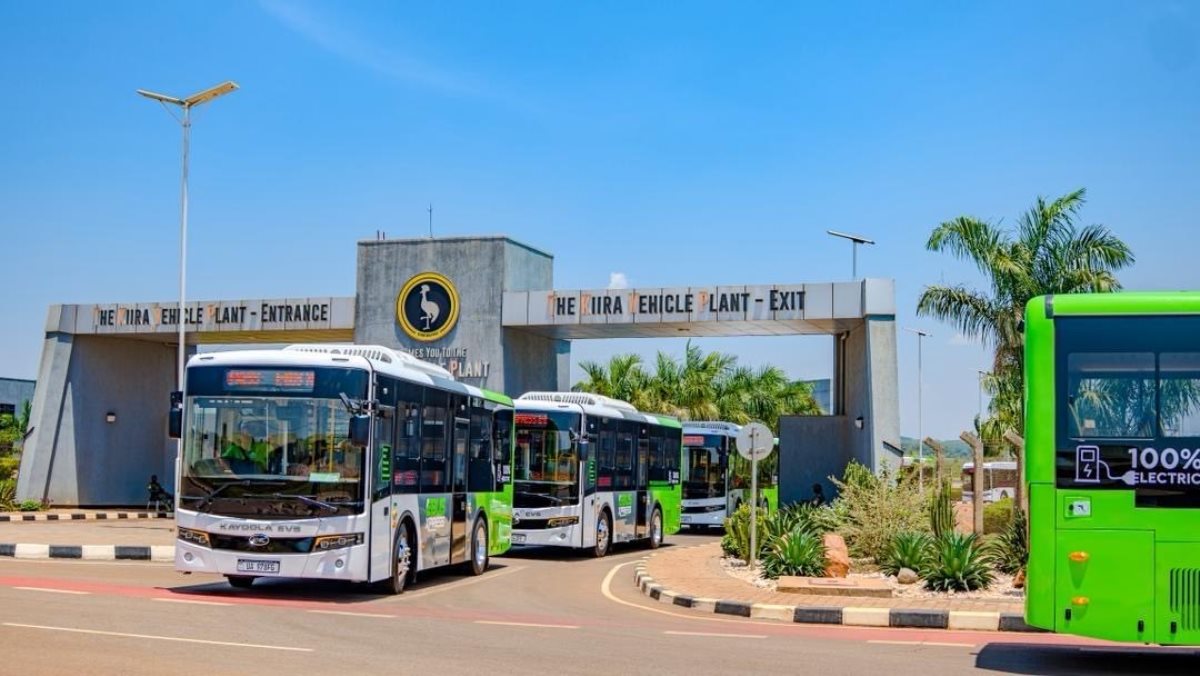
Zero-emission, air-conditioned, Wi-Fi-enabled and cashless, these locally manufactured buses offer cleaner air, more predictable schedules and lower long-term operating costs.
For travellers and residents alike, the service expands reliable public transport options in one of East Africa’s fastest-growing urban regions.
Yet modernisation inevitably creates pressure on the traditional minibus taxi (matatu) industry that has long formed the backbone of Kampala’s mobility system.
Estimates put the number of 14-seater taxis in the Greater Kampala Metropolitan Area at roughly 15,000 to 25,000 vehicles.
The taxi transportation sector supports livelihoods for well over 100,000 people, drivers, conductors, stage workers, mechanics, cleaners, vendors and related service providers, many of whom operate under precarious conditions with limited social protection.
Without deliberate inclusion, the expansion of organised electric bus services risks displacing informal operators and concentrating benefits among a narrower group of formal providers.
Uganda already possesses institutional building blocks that can prevent this outcome. Taxi Savings and Credit Cooperative Organisations (SACCOs) and operator associations provide ready platforms for collective financing, skills upgrading and gradual fleet transition.
Kenya offers a practical reference as the matatu Savings and Credit Cooperative Organisations (SACCOs) in the East African country have partnered with electric mobility companies to acquire electric vehicles through lease-to-own and pay-as-you-drive models.
Operators pool capital, share risk, reduce fuel and maintenance costs, and retain ownership stakes while improving service quality.
The result has been higher net returns for participating Savings and Credit Cooperative Organisations (SACCOs) members and a more orderly shift toward cleaner transport without wholesale exclusion of existing players.
Uganda can adapt this approach. Structured transition programmes could include preferential access for Taxi Savings and Credit Cooperative Organisations (SACCOs) to electric minibus financing, technical training, route integration agreements, and phased incentives that reward operators who modernise.
Such measures would protect jobs, professionalise the industry, and ensure that the environmental and efficiency gains of the Kayoola rollout are shared more widely.
For visitors and residents committed to responsible travel, the message is clear, cleaner buses are welcome, and so is an inclusive pathway that keeps livelihoods at the centre of urban transport reform.
Main Payment Methods for Regular Passengers for the Kayoola Express Buses
Passengers primarily pay using mobile money:
MTN MoMo:
- Dial *165*22# and follow the prompts to buy a ticket, use Merchant Code 594434.
Airtel Money:
- Dial *185*9# and follow the prompts to buy a ticket, use Merchant Code 594434, use Merchant Code 4405648
After successful payment, you receive a QR code or SMS code. Show this to the conductor or scanner when boarding.
Smart Card Option
An E-Bus Xpress card (sometimes linked to systems like weGo/KaCyber) is also available.
- You can get the card on the bus or at MTN service centres.
- Load funds onto it (usually via mobile money).
- Then tap the card to pay.
Student Payments
Students use smart digital wristbands under the School Cashless Days Campaign.
Parents can load money onto the wristband directly from MTN or Airtel mobile money accounts via USSD codes. Students then tap the wristband to pay.
Additional Notes for Travellers
The system is powered in partnership with MTN Uganda (and previously involved partners like KaCyber/Sparklab for cards and student solutions).
For the most up-to-date codes or assistance, check the official E-Bus Xpress website www.ebusxpress.com, their social channels, or contact their customer care.
Fares on the Kira routes start from UGX 800 for adults and UGX 400 for students (distance-dependent) once paid service begins.
You can also book the following tours with us at Responsible Tourism Company;
For accommodation in Kampala chek out our Kampala hotels for a vast number of options from budget, mid-range to luxury accommodation in Kampala.
These routes make it easier for visitors to move around without relying solely on private vehicles, reducing their carbon footprint while supporting Uganda’s homegrown electric mobility industry.
Transport Tips for Travellers
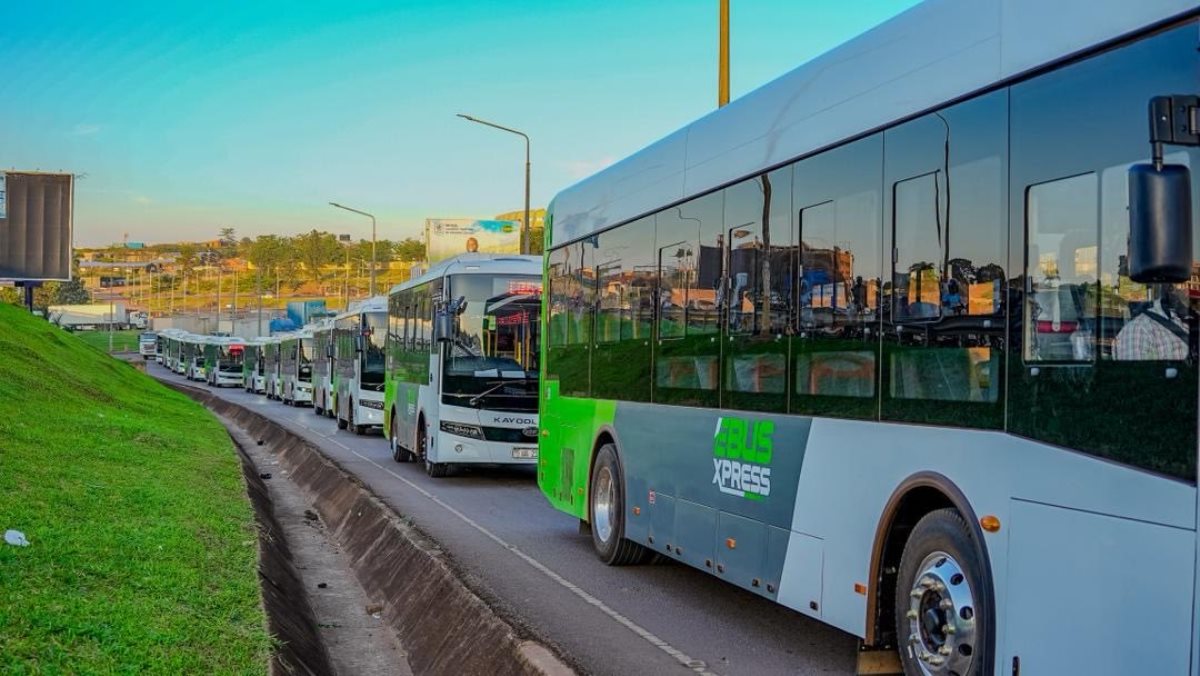
The buses operate on fixed schedules with five vehicles per route. Payment is cashless only, prepare mobile money or the accepted digital methods in advance. Look for the distinctive white-and-green Kayoola / EBUS XPRESS branding.
Ntinda serves as a major connection point. Services are designed to be more reliable and safer than many informal options currently operating in Greater Kampala.
About Kiira Motors Corporation
Kiira Motors Corporation is Uganda’s leading vehicle manufacturing company, focused on the design, development and production of sustainable mobility solutions, including the Kayoola range of electric buses.
Ready to travel more sustainably in Uganda?
Explore responsible, low-impact transport options and book with confidence on the Responsible Tourism Company Ltd Transport Page.
Choose journeys that support cleaner mobility and fair livelihoods for local communities.
Call/WhatsApp: +256 704 023 485
Visit www.responsibletourismcompany.com
Email: info@responsibletourismcompany.com
FAQs – Frequently Asked Questions
What are the new Kayoola electric bus routes in Kampala?
The three routes run from Ntinda to areas including Kira, Namugongo (via Naalya and Kyaliwajjala), and Kungu (via Kisasi and Kyanja).
How much do the Kayoola buses cost?
Adult fares start from UGX 800 and student fares from UGX 400, depending on distance. Payment is cashless only.
Can tourists easily reach Namugongo Martyrs Shrine by electric bus?
Yes. The Ntinda – Naalya – Kyaliwajjala – Namugongo – Sonde route provides a convenient, comfortable and sustainable option to this major attraction.
Are the buses comfortable for visitors?
Yes. They feature air conditioning, onboard Wi-Fi, modern safety systems and scheduled services, making them a pleasant alternative for travellers.
How does this support sustainable tourism in Uganda?
The locally built zero-emission Kayoola buses reduce pollution, showcase Ugandan engineering, and encourage travellers to use public transport instead of private vehicles.
Should I book a guided tour?
For a seamless experience that maximises cultural insight and supports local communities, contact Responsible Tourism Company Ltd to arrange a tailored, responsible itinerary.
This launch is more than improved commuting, it is innovation moving from the factory floor to the streets.
Hop on a Kayoola electric bus and discover a greener way to explore Kampala and its surroundings.